

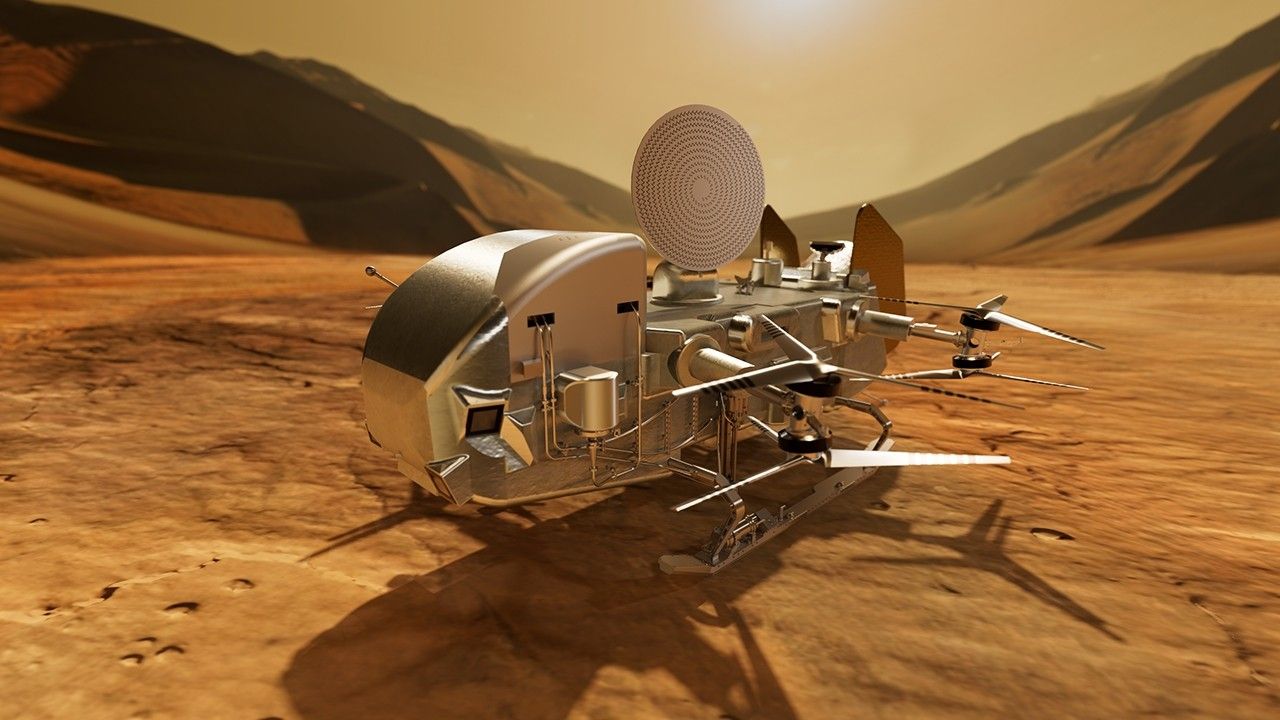
In 2034, a drone with eight spinning rotors will drop through the orange haze of Saturn's biggest moon, land on a field of dunes, and start flying around a world that's colder than anything on Earth. And your name can be on board.
On October 29, 2026, NASA opened sign-ups to send your name to Titan aboard Dragonfly, the first rotorcraft ever built to explore another world. Here's how to get on the passenger list, and why this mission is one of the wildest things NASA has ever built.
How to send your name to Titan
- Go to NASA's sign-up page: go.nasa.gov/dragonfly-names (it's in English and Spanish).
- Enter your name and fill in the short form.
- Get your boarding pass. NASA gives you a personalized digital boarding pass to save or share.
- Beat the deadline: 11:59 p.m. Eastern on January 15, 2027.
Every name submitted goes onto a microchip that will ride aboard Dragonfly all the way to Titan's surface.
What is NASA's Dragonfly?
Think of it as a nuclear-powered science drone. Dragonfly is a lander that can fly, built by the Johns Hopkins Applied Physics Laboratory (APL) in Maryland and led by planetary scientist Elizabeth "Zibi" Turtle. It's the fourth mission in NASA's New Frontiers program, the same family as New Horizons, the probe that flew past Pluto.
The plan: launch no earlier than July 2028 on a SpaceX Falcon Heavy from Kennedy Space Center, spend about six years crossing the solar system, then land in a field of dunes near Selk crater in 2034. From there, Dragonfly will hop from spot to spot, flying several miles at a time, during a science mission planned to last more than three years.
It can't run on solar panels. Titan gets about 1% of the sunlight Earth does, and its thick haze blocks much of that. Instead Dragonfly carries a nuclear power source that slowly charges its batteries while it sits on the ground. It flies, lands, recharges, studies the ground underneath it, then does it all again, roughly once every Titan day. A single Titan day lasts about 16 Earth days.
Why Titan is the perfect place to fly
Titan is weird in the best way. It's bigger than the planet Mercury, and it's the only moon in the solar system with a thick atmosphere. The air there is about four times denser than ours, and gravity is only about one-seventh of Earth's. Put those together and flying is easy. On Titan, you could strap on wings and flap your way into the sky.
It's also brutally cold, about −290°F (−179°C). That's so cold that water ice is as hard as rock, and methane, which is a gas on Earth, falls as rain. Titan has methane rivers, methane lakes and seas, clouds and seasons. It's the only other place we know of with liquid on its surface.
And the whole moon is coated in organic molecules, the carbon-rich building blocks that, on Earth, eventually led to life. Dragonfly's main job is to sample that material and figure out how far Titan's chemistry has gotten on the road toward biology. Scientists call that "prebiotic chemistry," the steps that come before life.
Why this matters
Putting your name on a microchip won't change the science. But it does change how it feels to follow a mission. NASA has done this before for rovers and probes, and it works for a simple reason: when your name is on it, you check on it. You watch the launch. You look up when it lands.
And Dragonfly is worth watching. We've landed on Titan exactly once, when the European Huygens probe parachuted down in 2005 and sent back data for about an hour before going quiet. Dragonfly won't just land. It will move around, sampling different kinds of ground over years, and it'll be doing it as a flying machine on a world over 800 million miles from the Sun. The only powered aircraft ever flown on another world so far is NASA's little Ingenuity helicopter on Mars. Dragonfly is a much bigger leap.
Here's the part most headlines skip: by the time Dragonfly lands, it will have been about 15 years since NASA picked the mission in 2019. If you sign up today, your name launches in 2028 and touches down in 2034. That's a long wait, but your name gets a ride to one of the strangest places in the solar system.
What's next
- Now through January 15, 2027: name sign-ups are open.
- Now through 2028: Dragonfly is being assembled and tested at APL in Laurel, Maryland.
- July 2028 (earliest): launch on a Falcon Heavy.
- 2034: arrival and landing on Titan, then years of flights across its dunes and craters.
It's a busy era for missions to strange moons. Japan's MMX also just launched to bring home a piece of Mars's moon Phobos.
So, are you signing up? And whose name are you sending with yours?
Sources
Enjoyed this? Ancient Skies is free and made by one space fan. Buy me a coffee ☕
Keep reading
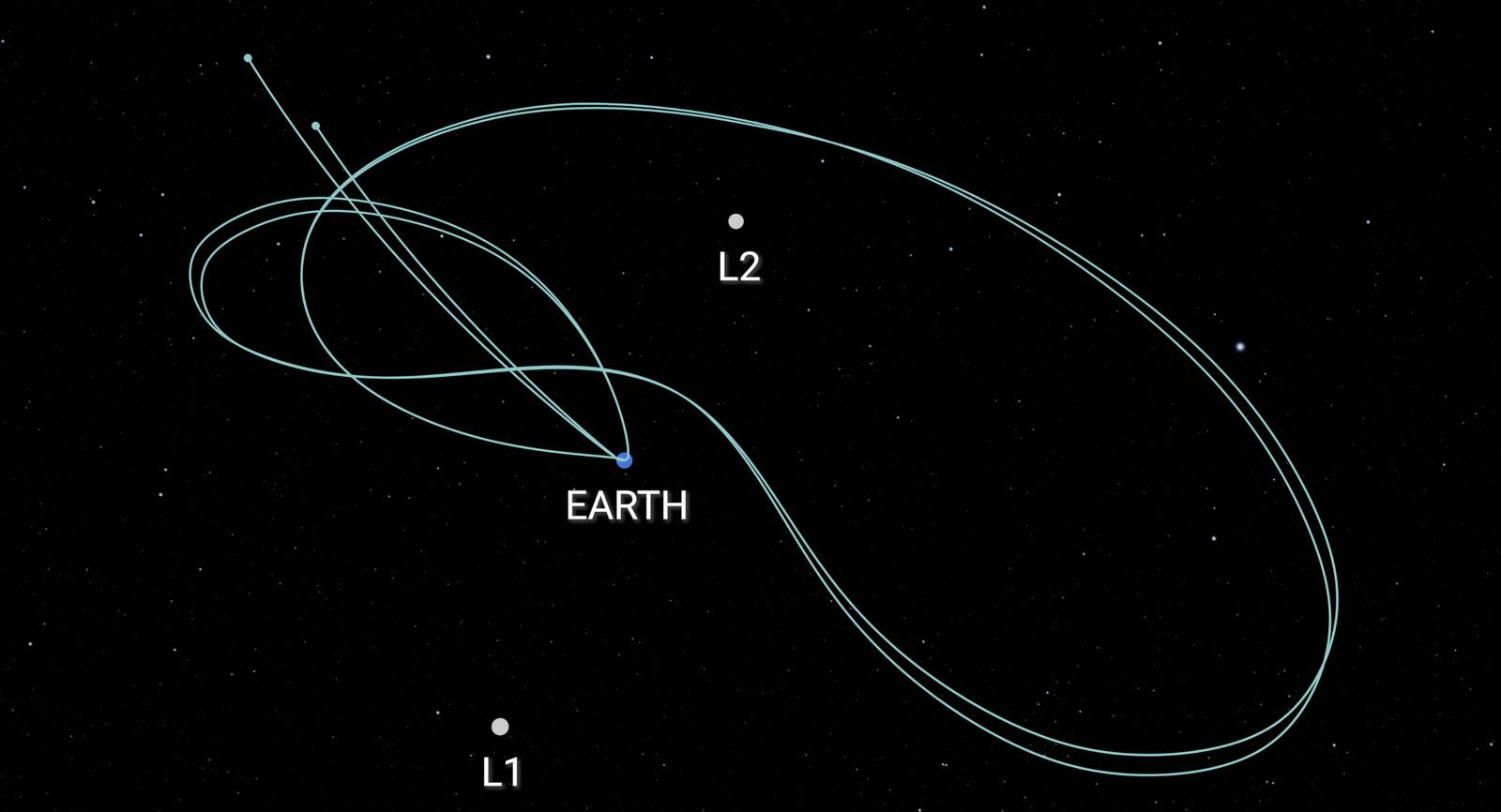
Why NASA's ESCAPADE Mars Twins Are Swinging Back Past Earth This Week
NASA's twin ESCAPADE probes return to Earth Nov. 7 and 9 for a slingshot engine burn that sends them to Mars. Here's how it works and how to spot them.
November 3, 2026 · 5 min read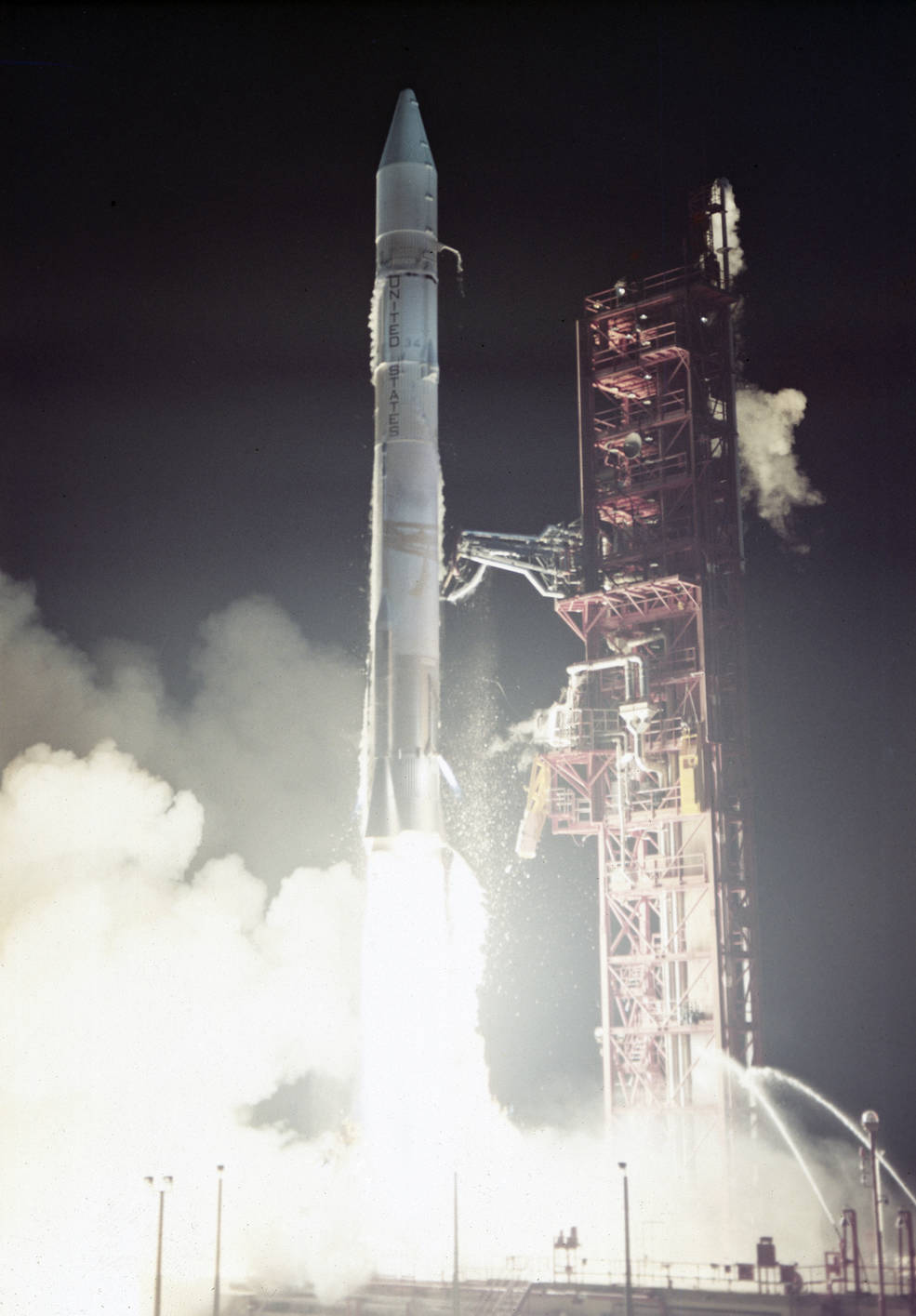
Today in Space History, Nov. 3: Mariner 10 Heads for Mercury by Way of a Venus Slingshot
On Nov. 3, 1973, NASA launched Mariner 10, the first probe to visit Mercury and the first to use one planet's gravity to reach another.
November 3, 2026 · 3 min read