

NASA's ESCAPADE mission launched for Mars a year ago. So why are its two spacecraft about to come screaming back past Earth?
Because that was the plan all along. This week, the twin probes, nicknamed Blue and Gold, swing in close to our planet, fire their engines at just the right moment, and fling themselves toward Mars. NASA says it's a maneuver none of its spacecraft has ever flown before.
Miss the moment, and Mars drifts out of reach. No pressure.
What is ESCAPADE?
ESCAPADE stands for Escape and Plasma Acceleration and Dynamics Explorers. It's a pair of identical spacecraft, each about the size of a fridge, built to study how the solar wind strips gas off Mars.
Billions of years ago, Mars had a thicker atmosphere and liquid water on its surface. Today it's a cold, thin-aired desert. A big part of that story is the Sun: a constant stream of charged particles has been sanding the Martian atmosphere away for eons. Mars has no global magnetic field to shield it, just a patchy, tangled "hybrid" magnetosphere.
Other orbiters have studied this from a single spot at a time. ESCAPADE's trick is having two. Fly them together and you can tell whether a change is happening across space or over time, something one spacecraft can't untangle. Principal investigator Rob Lillis of UC Berkeley calls it "a stereo perspective."
Why are the Mars probes coming back to Earth?
Here's the clever part. Earth and Mars only line up for an efficient trip about once every 26 months. Normally, that means a Mars mission has to launch inside a narrow window or wait two more years.
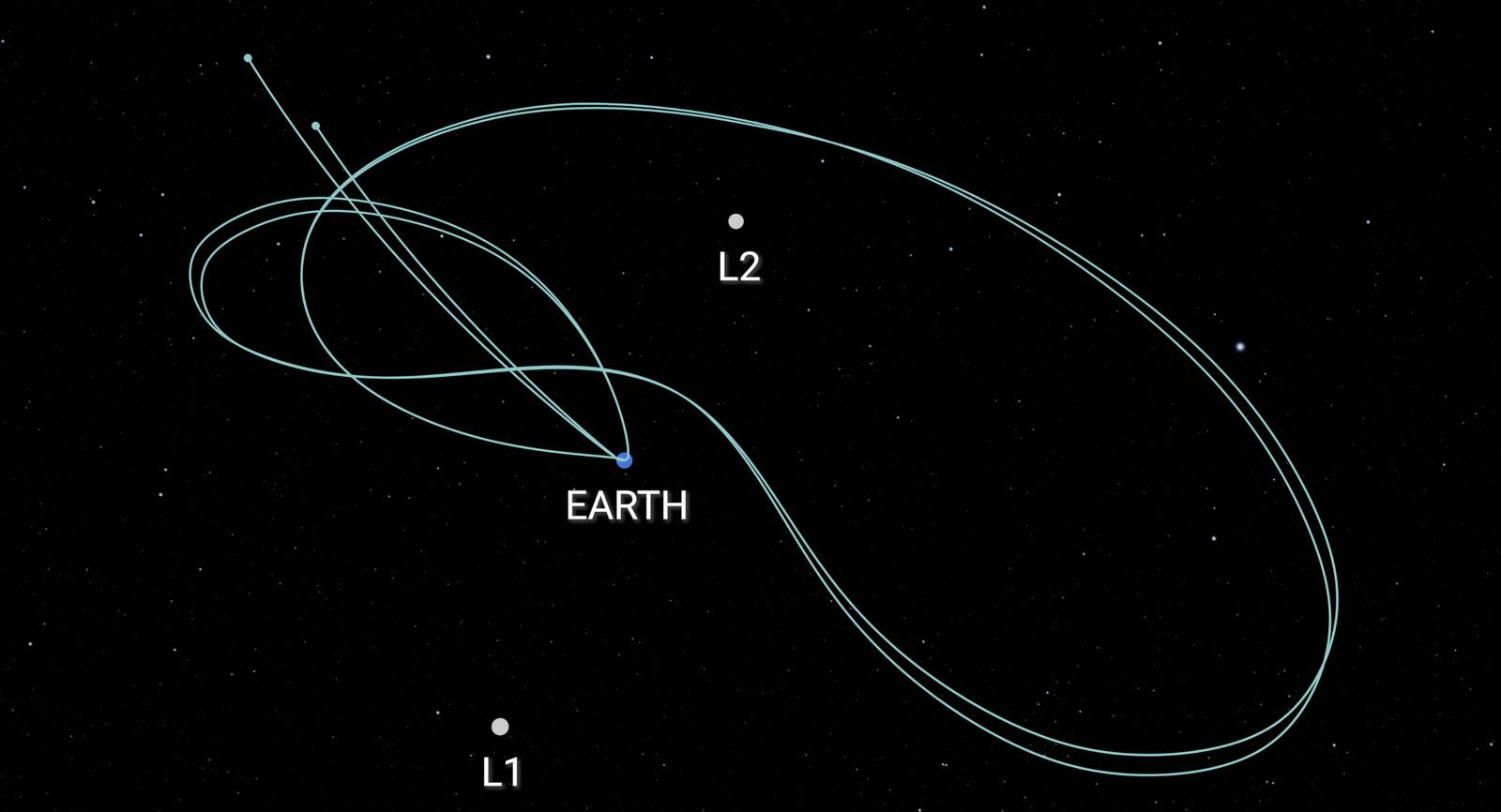
ESCAPADE didn't go straight to Mars. After launching on Blue Origin's New Glenn rocket on Nov. 13, 2025, the twins headed out to a parking spot near Lagrange point 2, a gravitational balance point on the far side of Earth from the Sun. They've spent the past year looping around it in a lopsided, kidney-bean-shaped orbit, waiting for the planets to line up.
Now they're falling back toward Earth. At their lowest point they'll be moving faster than at any other time in that orbit, and that's exactly when an engine burn gives you the most bang for your buck. (Rocket scientists call this the Oberth effect.) Each spacecraft fires its main engine for about nine minutes near closest approach, a maneuver called trans-Mars injection.
That burn adds more than 1,000 mph to each spacecraft's speed, taking it from about 6.3 to about 6.7 miles per second (roughly 10.1 to 10.8 km per second). That's around 30 times the speed of sound. Earth's gravity does the rest, slinging them onto a path toward Mars.
When is the ESCAPADE Earth flyby?
The twins go one at a time, two days apart. According to NASA:
- First spacecraft: burn begins 4:51 a.m. EST (3:51 a.m. CST) on Saturday, Nov. 7, with closest approach around 5 a.m. EST.
- Second spacecraft: burn begins 5:51 a.m. EST (4:51 a.m. CST) on Monday, Nov. 9, with closest approach around 6 a.m. EST.
At closest approach they'll pass roughly 600 to 1,100 miles (about 970 to 1,770 km) above Earth's surface. For comparison, the International Space Station orbits about 250 miles up. Both burns happen over southern Australia.
Can you see ESCAPADE from Earth?
Not with your eyes alone. These are two fridge-sized spacecraft hundreds of miles up, and NASA says you'll likely need a telescope to catch them.
If you've got one, the best views of the burns themselves are from southern Australia. In the western U.S., NASA says the first spacecraft should be brightest between midnight and 1 a.m. PST on Nov. 7, and the second between 1 and 2 a.m. PST on Nov. 9. NASA has posted star charts for several locations on its Scientific Visualization Studio site, and you can get exact positions from JPL's Horizons system.
Realistically, this is one for experienced backyard astronomers with a decent scope and a good tracking setup. Everyone else can cheer from bed.
Is ESCAPADE the same as Blue Origin?
Easy mix-up. The spacecraft named Blue has nothing to do with Blue Origin, the company whose New Glenn rocket launched it. Blue and Gold are named after UC Berkeley's school colors, since the mission is led by Berkeley's Space Sciences Laboratory. The spacecraft themselves were built by Rocket Lab, and NASA funds the mission through its heliophysics program.
What did ESCAPADE find while waiting?
The year of loitering wasn't wasted. On their loops around L2, the twins passed through a far-off stretch of Earth's magnetotail, the long, wind-blown tail of our planet's magnetic field that streams away from the Sun. NASA says no spacecraft had directly explored that region before. Mission scientists say results are coming soon.
So before it ever reaches Mars, ESCAPADE has already done some first-of-its-kind science at home.
Why this matters
For decades, the 26-month Mars launch window has been the boss. Miss it, and your spacecraft sits in a clean room for two years. ESCAPADE is testing a different idea: launch when the rocket is ready, park nearby, and leave when the planets say go.
That matters for cheap missions especially. ESCAPADE costs less than $80 million, a small fraction of a traditional Mars orbiter. Small missions often ride on rockets whose schedules they don't control. A parking-orbit-then-slingshot approach gives them breathing room.
And the science points straight at future explorers. Anyone who travels to Mars will live under that thin, exposed sky, where solar storms hit hard. Knowing how Mars' space weather behaves, in stereo, is the kind of homework you want done before people go.
There's also something lovely about it. To get to Mars, these probes first had to come home, one last pass over the planet that built them.
What's next for ESCAPADE?
If both burns go to plan, the twins begin a roughly 10-month cruise, with small course corrections along the way. NASA expects them to arrive at Mars on Sept. 7 and Sept. 9, 2027, where ESCAPADE becomes the first mission to fly two spacecraft in formation around Mars.
First they'll follow each other in the same orbit for about six months. Then they'll split up, one swinging farther from Mars and one staying closer, to sample different parts of its magnetic bubble at the same time. Full science operations are planned for 2028.
If you had a telescope pointed at the sky this weekend, would you try to spot two little spacecraft on their way to Mars?
Sources
Enjoyed this? Ancient Skies is free and made by one space fan. Buy me a coffee ☕
Keep reading
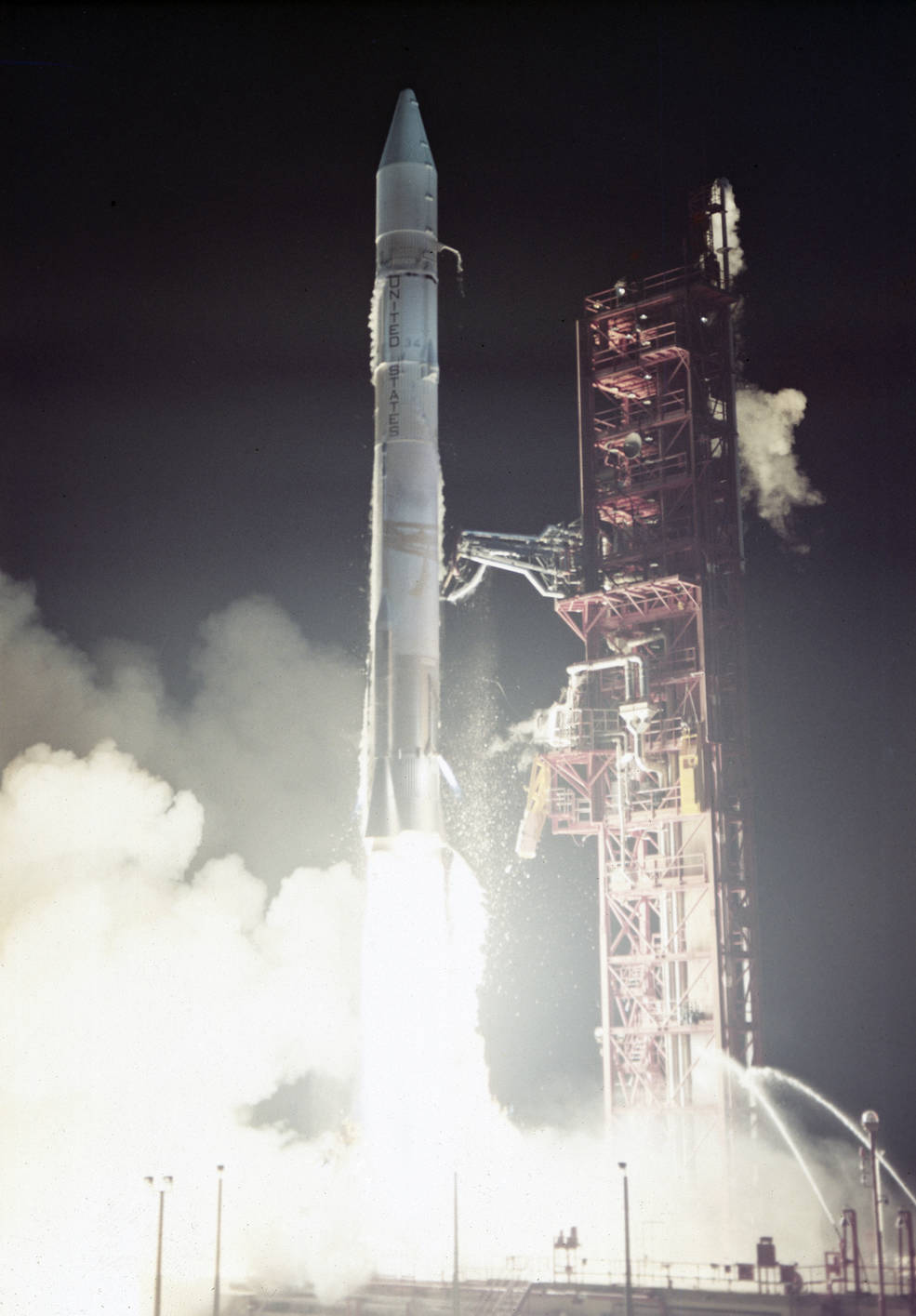
Today in Space History, Nov. 3: Mariner 10 Heads for Mercury by Way of a Venus Slingshot
On Nov. 3, 1973, NASA launched Mariner 10, the first probe to visit Mercury and the first to use one planet's gravity to reach another.
November 3, 2026 · 3 min read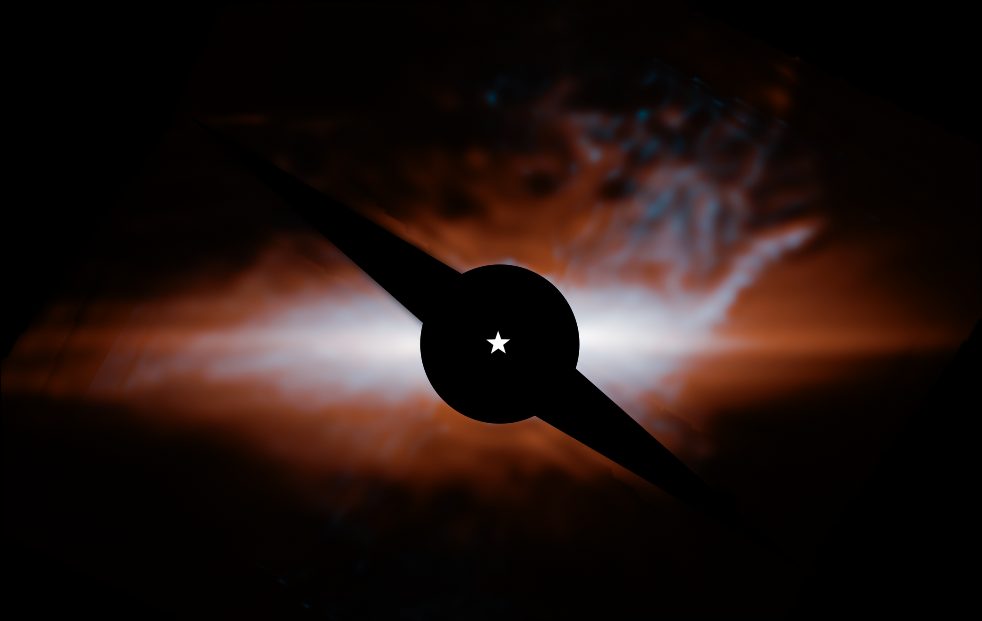
Why Hubble Couldn't See Beta Pictoris' Cosmic 'Cat's Tail' Until Now
Hubble finally spots the Beta Pictoris 'cat's tail' Webb found: ultra-dark carbon dust from a crash between two Ceres-sized worlds.
November 2, 2026 · 5 min read