
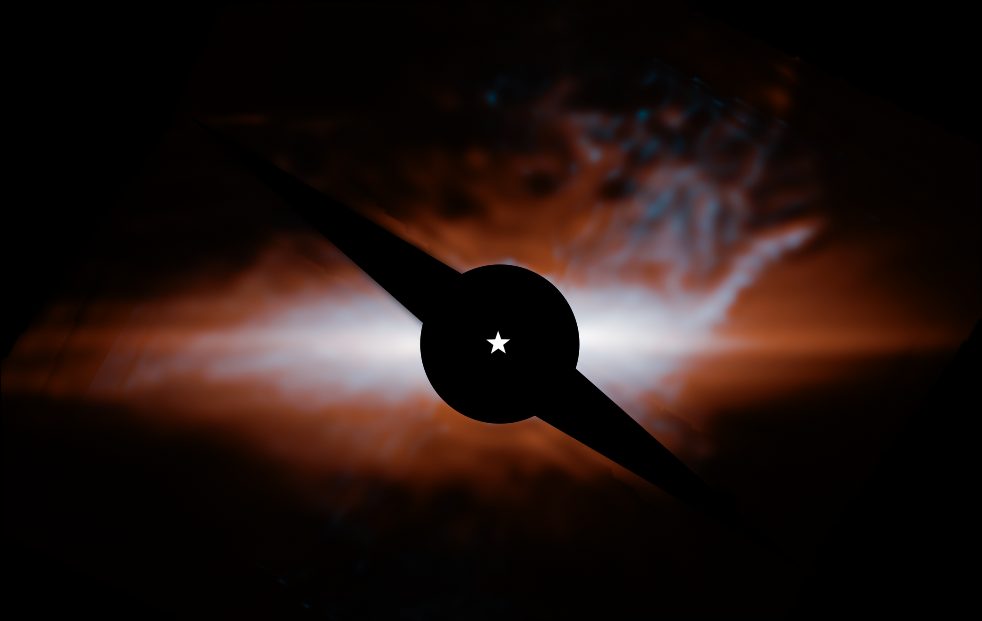
Around a young star called Beta Pictoris, 63 light-years from Earth, there is a long, curling streak of dust that looks like a cat's tail. The James Webb Space Telescope found it in 2024. The Hubble Space Telescope had been staring at the same star for decades and never saw a thing.
Now it has. And the reason it took so long is the best part: the tail is made of dust so dark it barely reflects light at all.
What is the Beta Pictoris "cat's tail"?
Beta Pictoris is a hot, bright star about 1.8 times the mass of our Sun. It's only about 20 million years old, which makes it a teenager by star standards.
Because it's so young, Beta Pictoris is still surrounded by a huge, flat disk of dust and rocky leftovers, the raw material that planets are built from. At least two giant planets already orbit inside it. Astronomers have studied this disk since the 1980s, and Hubble later showed there is actually a second, slightly tilted disk sitting inside the main one.
In January 2024, a team led by Isabel Rebollido used Webb's MIRI instrument, which sees in mid-infrared light, to spot something new: a sharply angled branch of dust curving away from one side of that second disk. It looked like the tip of a cat's tail, and the name stuck.
What did Hubble find?
A new study in The Astrophysical Journal Letters, led by Arin Avsar, a PhD candidate at the University of Arizona's Lunar and Planetary Laboratory, pulled together six sets of Hubble observations taken between 2012 and 2025. The team used Hubble's STIS instrument with a coronagraph, a small mask that blocks the glare of the star so the faint dust around it can show up.
Stack 14 years of that data together, and the cat's tail finally appears in visible light for the first time.
But only just. In Hubble's images, the tail is roughly 200 to 1,000 times fainter than it looks to Webb in infrared. Same dust. Wildly different brightness.
Hubble also traced the outer disk out to around 500 astronomical units from the star (an astronomical unit is the Earth–Sun distance, about 93 million miles). That's the farthest this instrument has ever followed it. Along the way, the team spotted a gentle warp and a lopsided glow in the outer halo of dust, which might be caused by the gravity of the planet Beta Pictoris b. The researchers say that idea still needs proper modeling to confirm.
Why was the cat's tail invisible to Hubble?
Think about a black T-shirt on a sunny day. It barely reflects any light, but it gets hot. That's basically what's happening here.
Hubble sees dust by the starlight it bounces back. Webb's MIRI sees dust by the heat it gives off. A grain that soaks up light instead of reflecting it will look dim to Hubble and bright to Webb.
By comparing the two, the team worked out what the grains must be like. They are extremely porous, more fluff than pebble, and made almost entirely of dark, carbon-rich organic material. As Avsar put it in the university's announcement, "These long chains of carbon atoms absorb visible light, so they're quite black."
How big were the objects that collided?
The leading explanation for the cat's tail, from the 2024 Webb work, is a violent crash. Two large bodies slammed into each other, and the debris from that collision is still spreading out. NASA's Webb team estimated the dust-making event happened only about a century ago, from our point of view.
The new study adds a size estimate. To make the roughly 20 quintillion kilograms (2×10¹⁹ kg) of dark organic dust seen in the tail, each of the two colliding objects needed a mass of at least 1 to 3 × 10²¹ kg. That's in the same league as Pluto's moon Charon or the dwarf planet Makemake, and about one to three times the mass of Ceres, the largest object in our asteroid belt.
If those bodies had densities like the dwarf planets in our own solar system, each would have been around 370 to 500 miles (600 to 800 km) across.
The team also suggests the dark carbon material probably came from the insides of the shattered bodies, not their surfaces. In other words, the tail may be showing us what young dwarf planets are made of, deep down.
Is it the same as the Cat's Eye or Cat's Paw Nebula?
No, and it's easy to mix them up. The sky has a lot of cats.
The Cat's Eye Nebula and the Cat's Paw Nebula are huge glowing clouds of gas thousands of light-years away. The Cat's Head Nebula is a dusty star-forming region in the Carina Nebula. The Beta Pictoris cat's tail is something else entirely: a small, dark streak of collision debris inside one star's planet-forming disk, right in our cosmic neighborhood.
Can you see Beta Pictoris?
The star, yes, if you're far enough south. Beta Pictoris shines at about magnitude 3.9, easy for the naked eye under dark skies. It sits in the small southern constellation Pictor, so from the southern US (roughly southern Texas and Florida) it only skims low over the southern horizon on winter nights. From the Southern Hemisphere it rides much higher.
The disk and the cat's tail? Not a chance with a backyard telescope. Seeing them takes space telescopes or the world's biggest observatories, with special optics to hide the star's glare.
Why this matters
Our own solar system went through a phase exactly like this. About 4.5 billion years ago, it was a crowded, chaotic disk where large bodies kept smashing into each other. One of those crashes is thought to have made our Moon. We can't rewind the tape to watch that happen here.
Beta Pictoris lets us watch a version of it live. And this study shows something a little humbling: some of the most important evidence was hiding in plain sight because it was too dark to see. If one telescope had been the whole story, we'd have missed the tail completely. It took two very different eyes, one seeing reflected light and one seeing heat, to work out what the dust is made of and how big the crash was.
What's next
The team wants dynamical models to test whether planet Beta Pictoris b is really what's bending the outer halo. Hubble also caught a faint, uncertain feature below the main disk that might be the visible-light side of the tilted second disk, though it could also be an artifact of the imaging. More observations should settle it.
And because the debris is still spreading, Beta Pictoris is one of the rare places where astronomers can watch a collision's aftermath change over just a few years. Keep checking back on this one.
So here's a question for you: if a crash between two Ceres-sized worlds happened in our own asteroid belt today, how long do you think it would take us to notice?
Sources
- Avsar et al. 2026, ApJL: Deep HST/STIS Coronagraphic Imaging of the β Pictoris Debris Disk
- arXiv: Deep HST/STIS Coronagraphic Imaging of the β Pictoris Debris Disk (preprint)
- University of Arizona: Enormous 'cat's tail' tells of cosmic collision 63 light-years away
- NASA: Webb Discovers Dusty 'Cat's Tail' in Beta Pictoris System (2024)
- Universe Today: Colliding Dwarf Planets Created a 'Cat's Tail'
Enjoyed this? Ancient Skies is free and made by one space fan. Buy me a coffee ☕
Keep reading
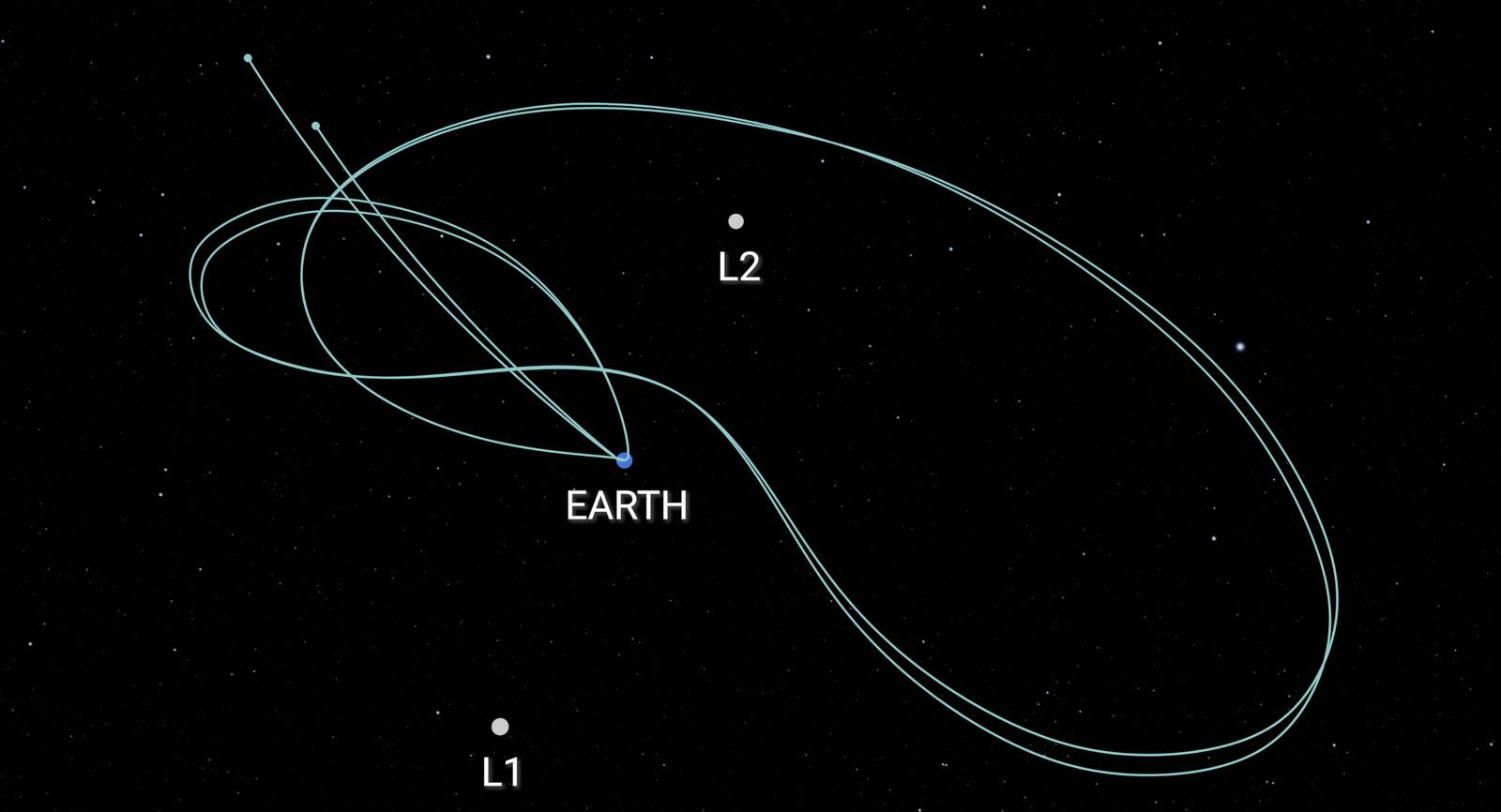
Why NASA's ESCAPADE Mars Twins Are Swinging Back Past Earth This Week
NASA's twin ESCAPADE probes return to Earth Nov. 7 and 9 for a slingshot engine burn that sends them to Mars. Here's how it works and how to spot them.
November 3, 2026 · 5 min read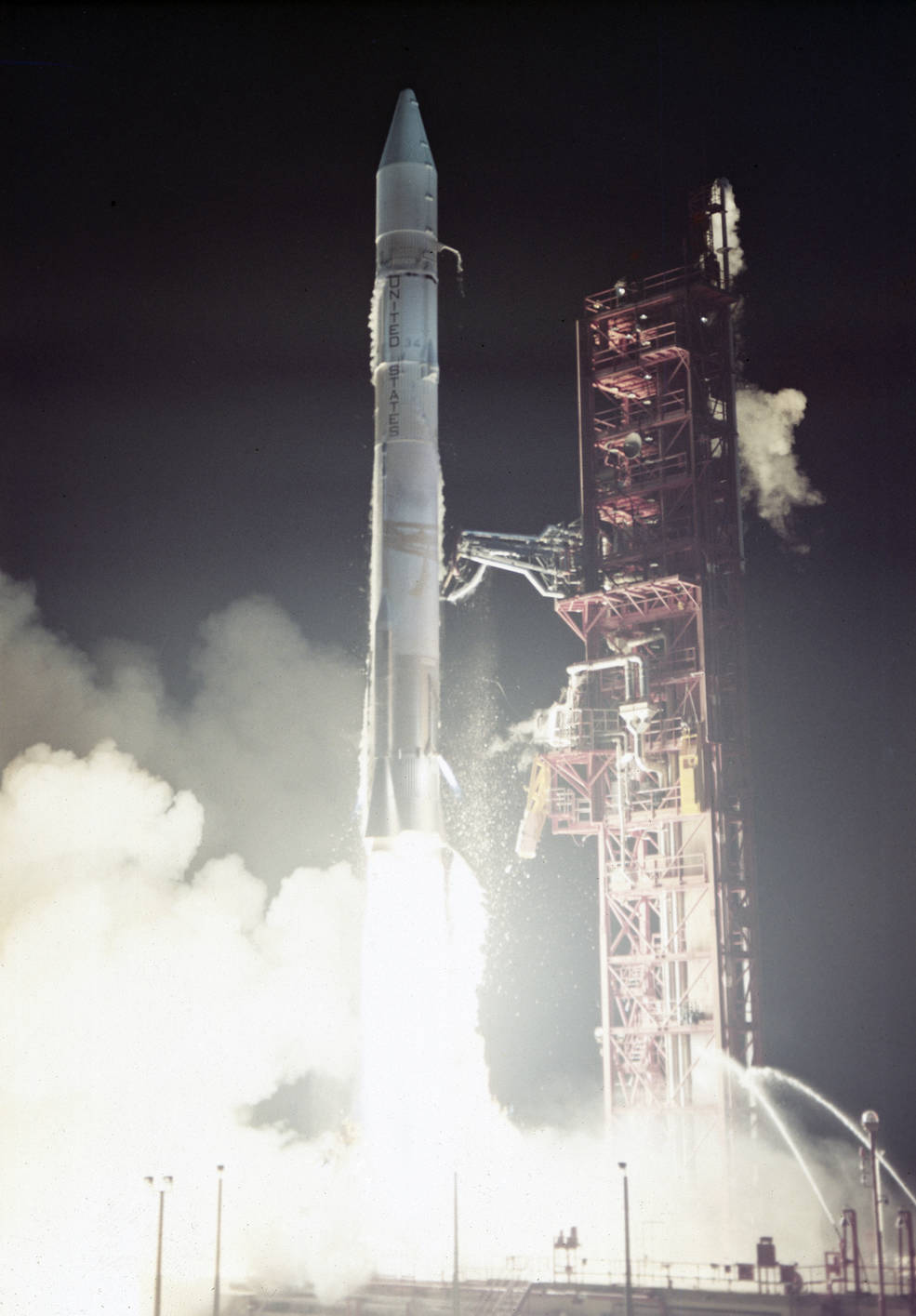
Today in Space History, Nov. 3: Mariner 10 Heads for Mercury by Way of a Venus Slingshot
On Nov. 3, 1973, NASA launched Mariner 10, the first probe to visit Mercury and the first to use one planet's gravity to reach another.
November 3, 2026 · 3 min read