

Prefer to watch? This is the full video version of the story.
What would happen if you fell into Jupiter? Not flew past it or orbited it, but fell straight in and kept going, all the way to the center?
The first surprise: there's nowhere to land. Jupiter has no surface. It just gets thicker, hotter and darker the deeper you go. So let's take the trip one layer at a time, using what NASA's probes have actually measured and what scientists think lies deeper.
How big is Jupiter?
Jupiter is about 11 Earths wide, and you could fit roughly 1,300 Earths inside it. It's 70,000 kilometers (about 43,000 miles) from the cloud tops to the center. That's the fall.
What happens before you even reach the clouds?
Start as far from Jupiter as our Moon is from Earth, about 384,000 kilometers out, and the fall takes roughly eight hours. You'd be inside Jupiter's radiation belts the whole way, some of the harshest in the solar system, so for this trip we need an imaginary suit that can't be destroyed. Everything you see is real. Only your survival is make-believe.
On the way down you'd pass the orbit of Io, the most volcanic world we know of, and fall right beside the Great Red Spot, a storm wider than Earth that has been raging for at least 190 years. By the time you hit the atmosphere you're moving at around 124,000 miles per hour.
A machine has actually done this. In December 1995, NASA's Galileo probe hit Jupiter's atmosphere at about 106,000 miles per hour. The gas in front of its heat shield turned into plasma at about 15,500°C, and the braking force peaked at 228 times Earth's gravity. Within a couple of minutes, all that speed was gone.
What is Jupiter made of?
Mostly hydrogen and helium, like the Sun. But the top is wrapped in three main layers of clouds, and you'd fall through all of them:
- Ammonia ice clouds: the white bands you see in telescope photos. It's about −110°C up here, sunlight is about 25 times dimmer than on Earth, and some cloud bands race around the planet at more than 300 miles per hour.
- Ammonium hydrosulfide clouds: the brown and orange layer. If you took your helmet off, it would smell like rotten eggs and cleaning fluid. About 30 kilometers down, the air pressure is already double Earth's.
- Water clouds: storm towers taller than Mount Everest stacked three times, full of lightning that's thought to be far more powerful than typical lightning on Earth. NASA's Juno spacecraft also found "mushballs" here: hailstones of ammonia and water slush that grow heavy and plunge downward. Just like you.
How deep has anything ever gone into Jupiter?
About 150 kilometers. That's where the Galileo probe went silent after 58 minutes, with the pressure at 22 times Earth's and the temperature at 153°C. It's the deepest any human-made object has ever reached inside Jupiter, and it's barely a scratch. Below that point, everything we know comes from physics, computer models and gravity measurements.
Does Jupiter have a surface?
No. This is the strangest part of the fall. The gas never suddenly turns into an ocean. It just gets denser and denser until it's somewhere between a gas and a liquid. There's no splash and no moment where you land. You just sink.
Several hundred kilometers down, the pressure matches the bottom of the Mariana Trench. By around 1,000 kilometers, it's hotter than lava and the hydrogen glows a dull red. The fluid is so thick that your fall slows to a crawl, and you'd drift downward for days or even weeks. And you'd still be only about one and a half percent of the way to the center.
Thousands of kilometers down, everything glows yellow-white, and it may even be raining. Scientists think helium separates out of the hydrogen deep inside Jupiter and falls as droplets: helium rain, sinking through a sea of glowing hydrogen.
What is metallic hydrogen?
Somewhere around 10,000 to 20,000 kilometers down, the pressure reaches millions of times Earth's, and hydrogen, the simplest element in the universe, starts behaving like a metal. It conducts electricity and flows like liquid mercury. Inside Jupiter there's an ocean of it bigger than the entire Earth.
As Jupiter spins, that metal ocean churns and generates the strongest magnetic field of any planet, about 20,000 times stronger than Earth's. If you could see it from here, it would look bigger than the full Moon in our sky. It also powers Jupiter's auroras, rings of light at the poles that are each bigger than our whole planet.
What's at the center of Jupiter?
For a long time, scientists pictured a small, solid ball of rock and ice. Then Juno started mapping Jupiter's gravity, and the core turned out to be "fuzzy": the heavy elements are spread out and mixed with hydrogen across a huge part of the planet's interior. One idea is that, billions of years ago, a large young planet slammed into Jupiter and stirred its core like a spoon in a cup of coffee.
At the very center, the temperature is estimated at around 20,000°C, about four times hotter than the surface of the Sun, with pressures tens of millions of times Earth's. These deep numbers come from models, not direct measurements, so treat them as best estimates.
What happens to things that fall into Jupiter?
Even in our impossible suit, there's only one ending. You wouldn't hit the bottom. You'd become part of Jupiter, your atoms mixed into the hydrogen and helium for billions of years.
We've watched this happen. In July 1994, Comet Shoemaker-Levy 9, already torn into more than 20 pieces, slammed into Jupiter one fragment after another over six days. The fireballs rose thousands of kilometers, and they left dark scars, some as big as Earth. Then the scars faded, and Jupiter swallowed every trace.
Can you see Jupiter right now?
Yes. In November 2026, Jupiter is in the constellation Leo. It rises around midnight in mid-November and a bit earlier toward the end of the month, and it's brighter than any star. The best time to look is before dawn, when it's high in the south. On November 15 and 16, Mars sits just over a degree from Jupiter in the morning sky. Even small binoculars will show its four biggest moons as tiny points of light lined up beside it.
Why this matters
Every part of this journey below the clouds is hidden. No one has ever seen it, and no machine has survived it. We know it's there because of math, gravity and a few brave spacecraft like Galileo and Juno.
And Jupiter matters far beyond itself. As the biggest planet, it shaped how the rest of the solar system formed, Earth included. Understanding what's inside it, from the metal ocean to that fuzzy core, helps scientists figure out how giant planets form, around our Sun and around other stars.
Watch the full fall
The video above takes you through the whole trip, from the Moon's distance to the center, with live depth, pressure and temperature readings the whole way down.
Your turn: which layer would you most want to see with your own eyes: the lightning storms, the helium rain or the metal ocean? Tell us in the comments on the video.
Sources
Enjoyed this? Ancient Skies is free and made by one space fan. Buy me a coffee ☕
Keep reading
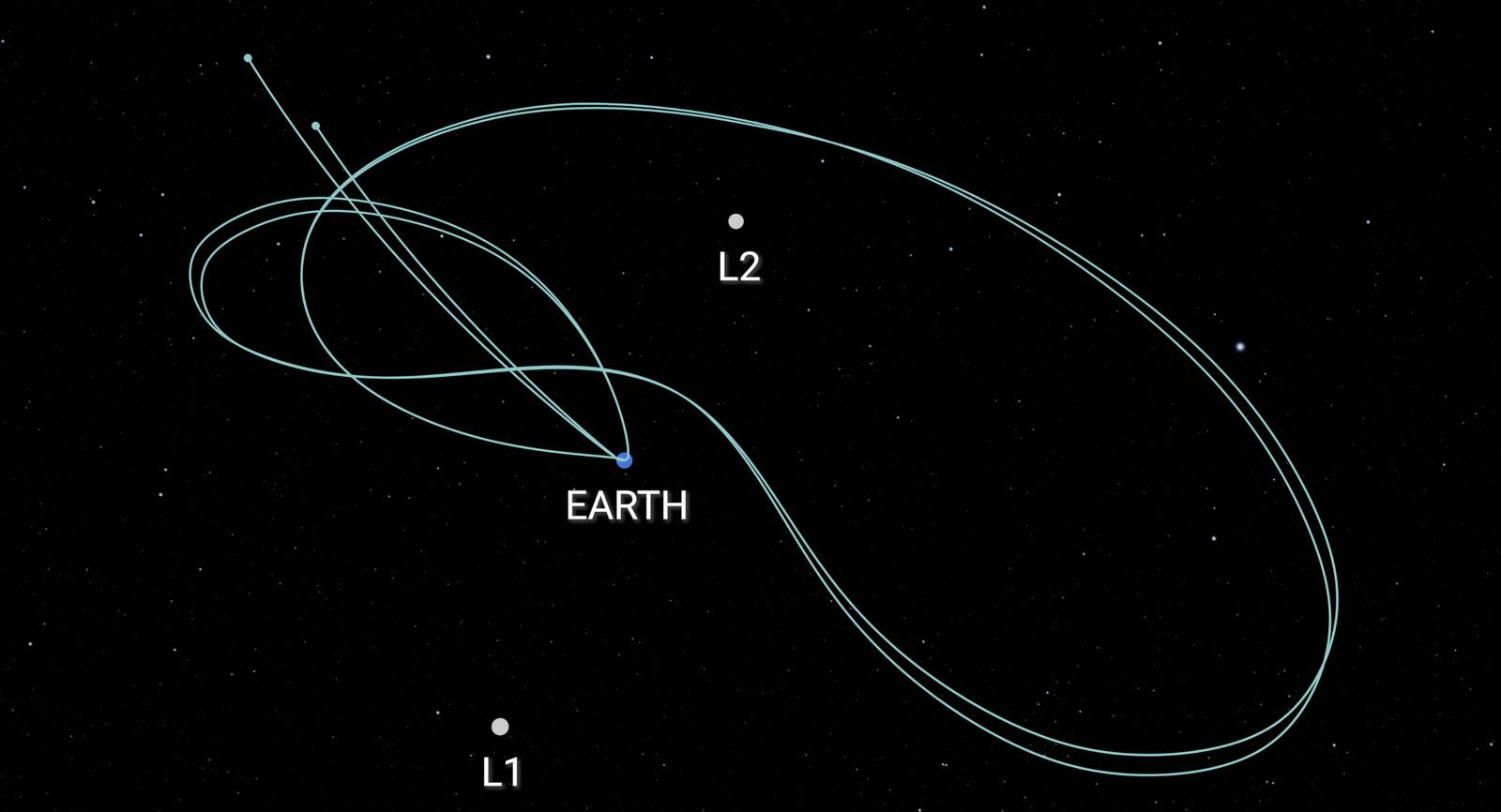
Why NASA's ESCAPADE Mars Twins Are Swinging Back Past Earth This Week
NASA's twin ESCAPADE probes return to Earth Nov. 7 and 9 for a slingshot engine burn that sends them to Mars. Here's how it works and how to spot them.
November 3, 2026 · 5 min read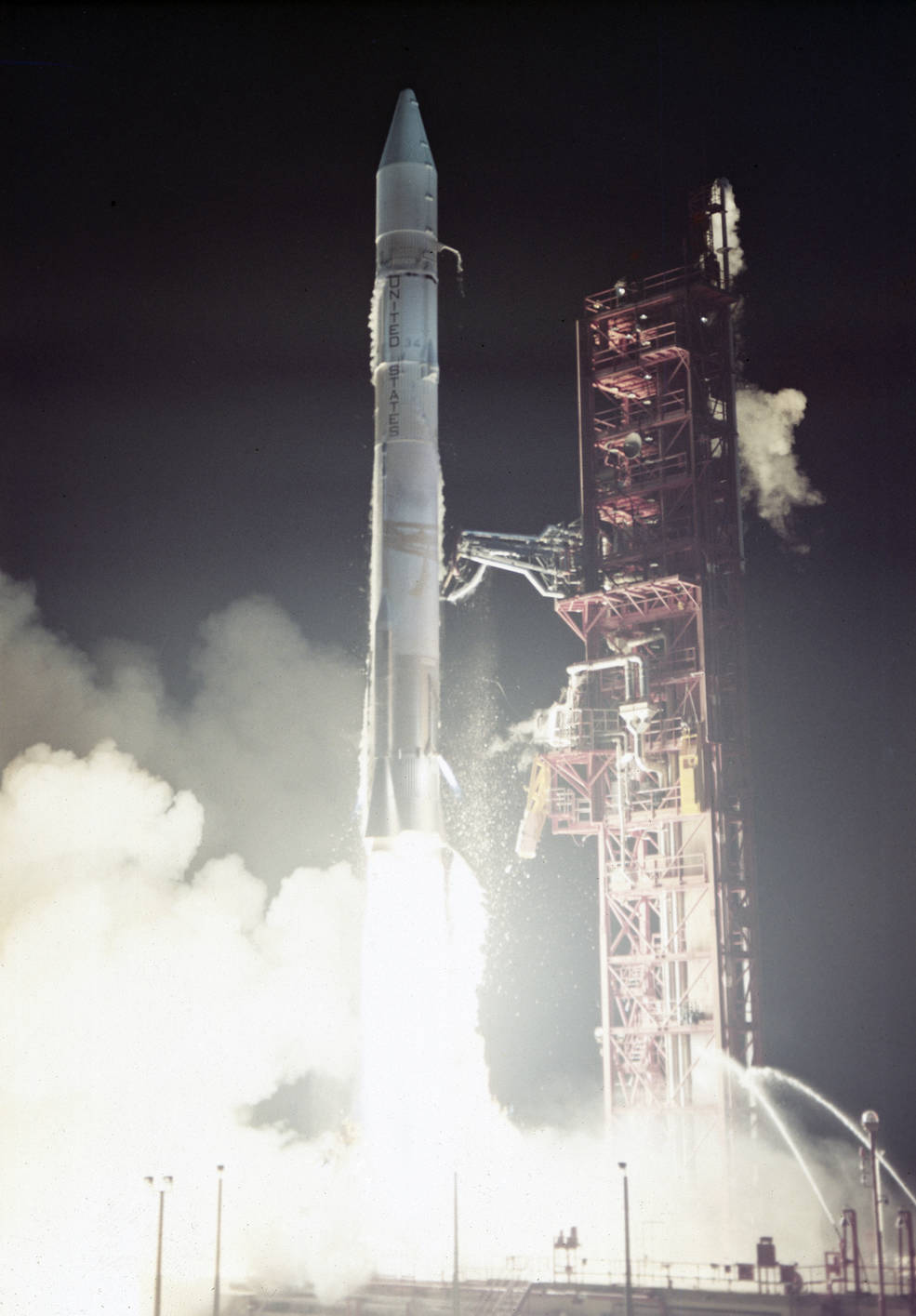
Today in Space History, Nov. 3: Mariner 10 Heads for Mercury by Way of a Venus Slingshot
On Nov. 3, 1973, NASA launched Mariner 10, the first probe to visit Mercury and the first to use one planet's gravity to reach another.
November 3, 2026 · 3 min read