
On Nov. 18, NASA's Voyager 1 will be so far away that a radio signal, moving at the speed of light, needs a full 24 hours to reach it. One light-day. No human-made object has ever been that far from home.
Think about that. You could send Voyager 1 a message at breakfast on Monday, and it wouldn't even arrive until breakfast on Tuesday. The reply? Breakfast on Wednesday.
And this little probe, launched when disco was big and the first Star Wars was still in theaters, is still talking back.
What is a light-day?
A light-day is simply how far light travels in one day. Light moves at about 186,000 miles (300,000 km) every second. Multiply that by the 86,400 seconds in a day and you get roughly 16.1 billion miles (25.9 billion km).
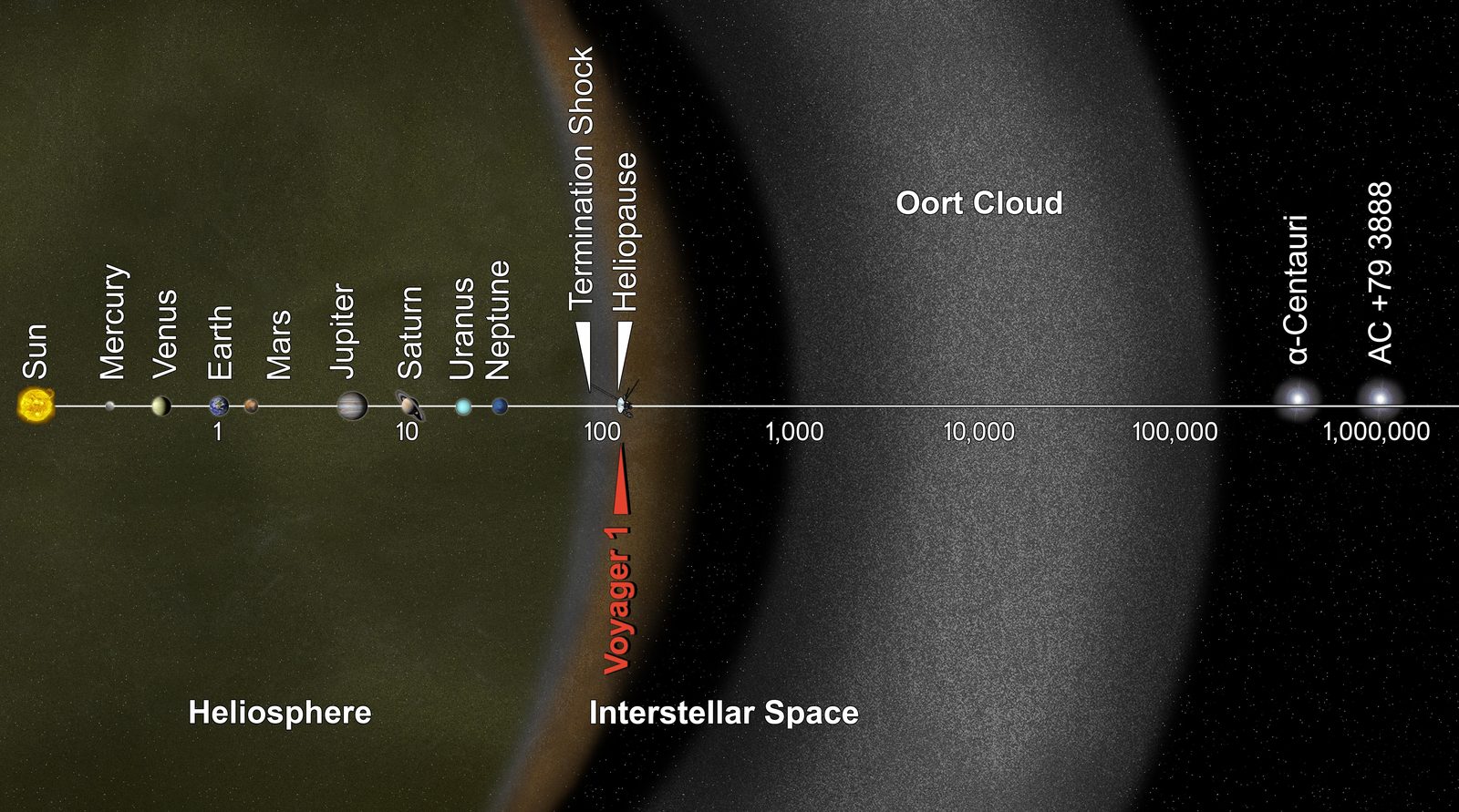
For comparison, sunlight reaches Earth in about 8 minutes. It reaches Pluto in around 5 and a half hours. Voyager 1 is about four times farther out than Pluto's average distance from the Sun, and climbing.
When exactly does Voyager 1 hit one light-day?
NASA's Jet Propulsion Laboratory puts the date at Nov. 18, 2026, when Voyager 1 will be about 16.09 billion miles (25.89 billion km) from Earth. NASA's figures, as reported by EarthSky, place the moment just after midnight US Central Time that day. You may see a slightly different date in some coverage, but NASA's own date is Nov. 18.
Nothing physical happens at the line, of course. No finish tape, no sonic boom. JPL points out the milestone won't change anything about the spacecraft or its surroundings. It's a number. But it's a very big, very round number, and it took nearly half a century to reach.
How fast is Voyager 1 going?
About 38,000 mph (61,000 km/h), coasting through interstellar space with no engine pushing it. That's fast enough to cross the continental US in under five minutes.
It got that speed from gravity. Voyager 1 launched on Sept. 5, 1977, then whipped past Jupiter in 1979 and Saturn in 1980, each flyby flinging it faster and farther. On Aug. 25, 2012, it crossed the heliopause, the edge of the bubble of solar wind around our Sun, and became the first spacecraft in interstellar space.
How does NASA still talk to Voyager 1?
Very patiently. NASA's Deep Space Network uses giant dish antennas in California, Spain and Australia to whisper commands at just 16 bits per second. Voyager 1's onboard computers have about 68 kilobytes of memory combined, less than a single photo on your phone.
After Nov. 18, every conversation becomes a two-day round trip. Voyager project manager Suzanne Dodd summed up the new routine: send your message, then "go home and you wait two days."
That delay makes troubleshooting tough. In mid-October, ground teams missed Voyager 1's signal on two scheduled tries a day apart. It came back on Oct. 20. NASA found that one set of thrusters had stopped working and the probe had switched to its backups by itself. Engineers are still working out why.
How much power does Voyager 1 have left?
Not much. Voyager 1 runs on a nuclear battery, a radioisotope thermoelectric generator that turns heat from decaying plutonium into electricity. It loses about 4 watts every year, and it now has roughly half the power it had at launch.
To keep going, the team keeps switching things off. Two science instruments have been shut down in recent years, including the Low-Energy Charged Particle instrument in April 2026. In early September, engineers swapped three onboard devices for less power-hungry alternatives, a risky move the team nicknamed the "Big Bang." According to JPL, without that fix another instrument might have had to go dark as soon as summer 2027.
Can you see Voyager 1?
No. Not with your eyes, not with binoculars, not with any backyard telescope, and not with any optical observatory either. Voyager 1 is about the size of a small car and reflects almost no sunlight out there. Only NASA's biggest radio dishes can pick up its faint signal.
But you can look in its direction. Voyager 1 is heading toward the constellation Ophiuchus, the Serpent Bearer. In early November, Ophiuchus sits low in the southwest right after dusk for skywatchers in the Northern Hemisphere, and it sets soon after. Find that patch of sky, and you're looking toward the farthest thing humans have ever built.
Is a light-day the same as a light-year?
Not even close, and it's an easy mix-up. A light-year is 365 times longer than a light-day, about 5.9 trillion miles (9.5 trillion km). The nearest star beyond the Sun, Proxima Centauri, sits about 4.2 light-years away, or more than 1,500 light-days. At its current speed, Voyager 1 would need roughly 75,000 years to cover that distance, and it isn't even headed there.
One more mix-up worth clearing up: Voyager 2 actually launched first, on Aug. 20, 1977. Voyager 1 got the "1" because it was on a faster path and reached Jupiter and Saturn first. Voyager 2 is about 2 billion miles (3.2 billion km) closer to us, and EarthSky, citing NASA, says it won't reach one light-day until around November 2035.
Why this matters
Here's the part that gets me. Voyager 1 was built with 1970s tech, designed for about a five-year tour of Jupiter and Saturn. Its cameras took their last pictures in 1990, including the famous "Pale Blue Dot" of Earth. Everything since has been overtime.
Yet that overtime is irreplaceable. Voyager 1 and Voyager 2 are the only working spacecraft that have ever sampled interstellar space directly, measuring magnetic fields, charged particles and the thin plasma between the stars. Nothing else we've launched is out there yet, and nothing will catch up for decades.
A light-day also gives the scale of space a handle you can actually feel. "Sixteen billion miles" is just a number. "Your text takes a whole day to arrive" is something you can picture. And even a whole day of light travel is barely a first step: the nearest star is still more than 1,500 of those days away.
The cosmos is huge. Voyager 1 is how we've started to measure it in human terms.
What's next for Voyager 1?
The plan is simple: keep it alive as long as possible. With power dropping every year, more systems will be switched off, and eventually there won't be enough electricity to run the science instruments or keep the antenna pointed at Earth. Some estimates put the end of contact sometime in the 2030s, as the signal fades beyond what NASA's antennas can hear.
Even after it goes quiet, Voyager 1 will keep drifting outward, carrying its Golden Record of Earth's sounds, music and greetings into the dark between the stars.
If you could send one message to Voyager 1, knowing it would take a full day to get there, what would you say?
Sources
- NASA's Voyager 1 Is About to Reach a Historic One-light-day Milestone (NASA JPL, via ScienceDaily)
- November's Night Sky Notes: Light-Day Away (NASA Science)
- Voyager 1 to reach 1 light-day from Earth on November 18 (EarthSky)
- NASA's Voyager 1 probe is about to reach a distance of 1 light-day from Earth (BBC Sky at Night Magazine)
Enjoyed this? Ancient Skies is free and made by one space fan. Buy me a coffee ☕
Keep reading
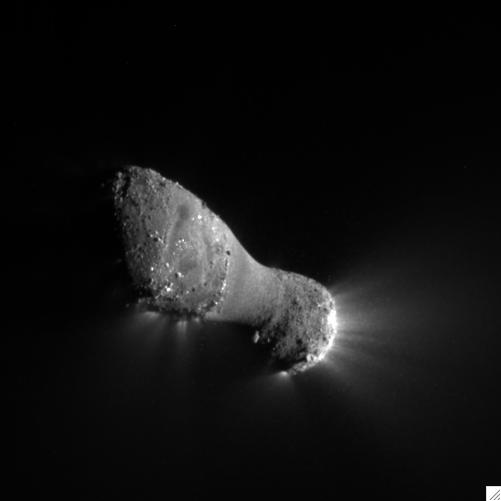
Today in Space History, Nov. 4: NASA's Deep Impact Buzzes Comet Hartley 2, a Dry-Ice-Powered 'Space Peanut'
On Nov. 4, 2010, NASA's Deep Impact (EPOXI) flew 435 miles from comet Hartley 2 and found a peanut-shaped nucleus firing jets of dry ice.
November 4, 2026 · 4 min read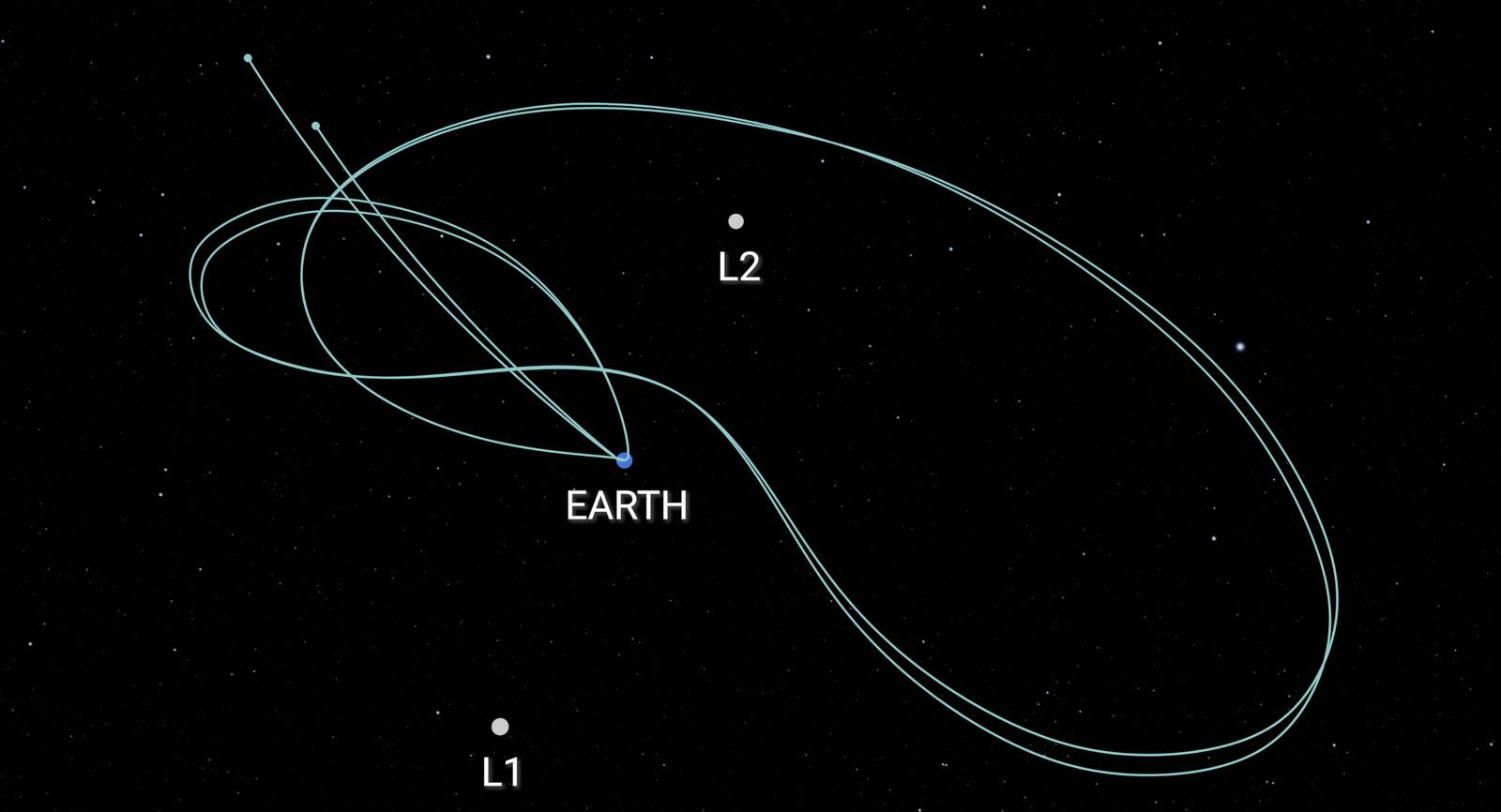
Why NASA's ESCAPADE Mars Twins Are Swinging Back Past Earth This Week
NASA's twin ESCAPADE probes return to Earth Nov. 7 and 9 for a slingshot engine burn that sends them to Mars. Here's how it works and how to spot them.
November 3, 2026 · 5 min read