
On November 2, 2002, a NASA spacecraft named Stardust zipped past a small, dark asteroid at about 7 kilometers per second, snapped dozens of pictures, and kept right on going. Nobody had planned the trip for the asteroid itself. It was a practice run. Stardust's real target was a comet, still more than a year away, and the team wanted to find out whether everything worked before the big day.
It did. And along the way, the asteroid turned out to be bigger than anyone thought.
What was the Stardust mission?
Stardust launched on February 7, 1999, with an unusual job: fly through the dusty cloud around a comet, catch some of that dust, and bring it home to Earth. To do that, it carried a tennis-racket-shaped collector filled with aerogel, a super-light foam that can slow tiny grains down gently instead of smashing them to bits.
Its target was Comet Wild 2 (pronounced "Vilt 2"), with the meeting set for January 2, 2004. A comet flyby happens fast and only once, so the team was looking for a chance to rehearse.
What is asteroid Annefrank?
Asteroid 5535 Annefrank is a small rocky body in the main asteroid belt between Mars and Jupiter. German astronomer Karl Reinmuth discovered it in 1942 at Heidelberg, and it was later named in honor of Anne Frank, the young diarist whose writing is read around the world.
Annefrank happened to sit close to Stardust's path on its way to the comet. That made it a handy stand-in: a real object to point the cameras at, track and fly past, without any of the pressure of the main event.
What happened during the flyby?
Closest approach came at 04:50 UTC on November 2, 2002, which was still the evening of November 1 in the United States. Stardust passed about 3,300 kilometers from the asteroid, a distance chosen to keep Annefrank in the camera's view as the sequence started and to stay clear of any dust or tiny moons that might be lurking nearby.
The spacecraft ran the whole comet playbook. It swung its camera to track the asteroid using its own targeting software, opened its dust collector, and switched on its two dust instruments. It even turned far away from its usual position and ran on battery power for a while, just like it would at the comet.
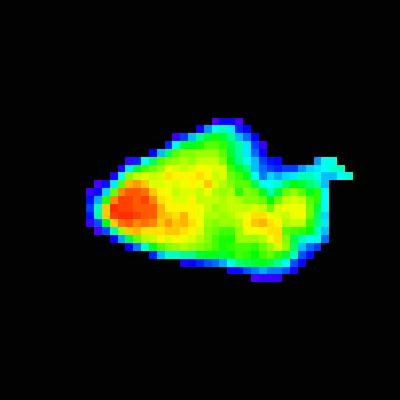
More than 70 images came back, and over 60 of them had Annefrank neatly centered. Mission leaders said the rehearsal went better than they had hoped. Their one small wish was that the asteroid had been a little brighter.
Was Annefrank bigger than expected?
Yes. Before the flyby, Annefrank was thought to be roughly 3 to 4 kilometers across. Stardust's pictures showed it was at least 6 kilometers wide, about double the estimate. It was also darker than expected, which is why the navigation camera had trouble spotting it on approach. The images show a lumpy, elongated rock with brighter and darker patches across its surface.
That's a nice reminder of how little we can tell about small asteroids from Earth. A faint dot in a telescope can hide a lot.
What happened next for Stardust?
The rehearsal paid off. On January 2, 2004, Stardust flew about 240 kilometers (150 miles) from Comet Wild 2, took sharp pictures of its cratered surface, and caught comet dust in its collector. The sample capsule then parachuted down in the Utah desert on January 15, 2006, making it the first mission to bring comet material back to Earth.
Scientists studying those grains found some surprises. Some of the dust contained minerals that form only at very high temperatures, which means material from close to the young Sun somehow ended up in a comet that formed in the cold outer solar system. In 2009, NASA researchers also reported finding glycine, an amino acid, in the sample. It was the first time an amino acid had been found in material from a comet.
Why this matters
Practice runs aren't glamorous, but they're how hard things get done. Stardust's quick look at Annefrank let the team test every step before the one shot they had at a comet, and that comet sample is still being studied today.
Missions still work this way. Spacecraft like Lucy and Psyche use early flybys and test sequences to check their instruments before reaching their main targets, and small asteroids keep turning out stranger than the dots they look like from Earth. Stardust's dress rehearsal is a good example of both: a careful warm-up that also taught us something new.
Sources
Enjoyed this? Ancient Skies is free and made by one space fan. Buy me a coffee ☕
Keep reading
Why NASA's ESCAPADE Mars Twins Are Swinging Back Past Earth This Week
NASA's twin ESCAPADE probes return to Earth Nov. 7 and 9 for a slingshot engine burn that sends them to Mars. Here's how it works and how to spot them.
November 3, 2026 · 5 min read
Today in Space History, Nov. 3: Mariner 10 Heads for Mercury by Way of a Venus Slingshot
On Nov. 3, 1973, NASA launched Mariner 10, the first probe to visit Mercury and the first to use one planet's gravity to reach another.
November 3, 2026 · 3 min read