

Prefer to watch? This is the full video version of the story.
Imagine stepping through a doorway into a parallel universe.
In a lot of them, you'd be dead before your back foot leaves the floor. Not because of monsters, and not because of an evil twin. Because of a number.
Nudge one setting in the physics of reality by half a percent, and the stars stop making the carbon your body is built from. Flip another one, and the hydrogen in you just stops existing.
But there's one kind of parallel universe where you'd be totally fine. You'd step out, breathe the air, and you could even walk up to your own front door. It's the one a lot of physicists actually take seriously, and you can never, ever get there.
Here's the thing nobody tells you up front: "parallel universe" isn't one idea. It's several completely different ideas wearing the same name. Back in 2003, MIT physicist Max Tegmark sorted them into four levels in a famous Scientific American article, and whether you live or die depends almost entirely on which level you end up in.
Level 1: Your copy is out there, but the trip would kill you
Level One is the simplest, and honestly the creepiest. It doesn't need any new physics at all. It just asks: what if space goes on forever?
Our observable universe is about 93 billion light-years across, but that's only the part light has had time to reach us from. Beyond it, there's probably more. Maybe infinitely more. And if space is infinite, and matter is spread out roughly the same everywhere, then sooner or later the particles have to repeat. Every possible arrangement shows up somewhere, including one that looks exactly like you, reading this exact sentence.
Tegmark actually did the math on how far away your nearest identical copy would be: about 101028 meters. That's not a number with 28 zeros. It's a number with ten-to-the-28 zeros. You couldn't write it out if you turned every atom in the observable universe into ink.
Could you survive there? The physics is identical, so your body would work perfectly. The problem is the landing. The universe is overwhelmingly empty, with only a handful of atoms in every cubic meter of space. Pop into a random spot and you'd almost certainly arrive in deep vacuum, where NASA estimates you'd have roughly 15 seconds of useful consciousness.
Level One isn't hostile. It's just enormous. It wouldn't kill you on purpose; it just wouldn't have anywhere to put you.
Level 2: The bubble universes, where the number gets you
This is where things get dangerous.
One of the leading ideas about the very early universe is inflation, a split second where space expanded insanely fast. Some versions, called eternal inflation, say it never fully stops. Every so often a region calms down and becomes its own bubble universe, and ours would just be one bubble. Different bubbles could end up with different laws: different strengths for the forces, different particle masses, maybe even different numbers of dimensions.
In 2000, a team led by Heinz Oberhummer ran computer models of red giant stars, the stars that forge most of the carbon in the universe, and tweaked the strength of the strong nuclear force. The result was brutal. Change it by more than about half a percent in either direction, and stars produce somewhere between 30 and 1,000 times less carbon or oxygen. For the electromagnetic force, the window was about 4 percent. No carbon, no you. No oxygen, no water, no air.
There's a great story behind that window. In 1953, astronomer Fred Hoyle realized stars shouldn't be able to make carbon at all unless the carbon nucleus had a very specific energy level nobody had ever measured. He told Willy Fowler's lab at Caltech where to look. They looked, and it was there. It's now called the Hoyle state. Fowler later shared the 1983 Nobel Prize for work on how stars build elements. Hoyle, the one who predicted it, didn't.
Flip a different switch. Right now a neutron weighs just a tiny bit more than a proton, about 0.14 percent more. If it were the other way around, protons would decay into neutrons and hydrogen atoms couldn't stick around. Roughly six out of every ten atoms in your body are hydrogen, so you'd fall apart at the most basic level.
And dimensions? In 1917, physicist Paul Ehrenfest showed that if space had four dimensions instead of three, gravity would weaken so fast with distance that planets couldn't hold stable orbits. Later work showed atoms would have the same problem. In a four-dimensional bubble, there's no stable Earth to stand on, and no stable you standing on it.
Here's the twist most videos skip: not every change is a death sentence. In 2006, a group of physicists asked what would happen if you deleted the weak nuclear force completely. With a few other adjustments, that universe could still form galaxies, stars, and the chemistry needed for life. So some bubbles might be livable, just not necessarily for us.
Has anything ever leaked through?
If another bubble ever bumped into ours, it might have left a circular bruise on the oldest light in the universe, the cosmic microwave background. Around 2011, a team scanned data from NASA's WMAP satellite for exactly those kinds of marks. Nothing conclusive.
People love to bring up the CMB Cold Spot, a patch of sky that's colder than it should be. The go-to explanation used to be a giant empty region of space in front of it, but in 2017 a Durham University study found there wasn't a big enough void there to explain it. Most cosmologists still think it's probably a statistical fluke, but it hasn't been fully solved.
You might also have seen headlines about scientists in Antarctica finding a parallel universe where time runs backward. That came from a NASA balloon experiment called ANITA, which picked up two strange signals that seemed to come up out of the ice. The signals were real and genuinely weird, but the parallel-universe part was never something the team claimed. In 2025, the Pierre Auger Observatory checked over 14 years of its own data for the same kind of event. If those signals were what they looked like, Auger should have seen at least eight. It found one, about what you'd expect from background noise.
The mirror universe that would turn you into a bomb
In 2018, physicists Latham Boyle, Kieran Finn, and Neil Turok proposed that the Big Bang might have produced a pair: our universe, and a mirror-image universe on the other side of the Big Bang where time runs the opposite way and everything is made of antimatter.
Could you survive there? Not even a little. When matter touches antimatter, both are wiped out and turned completely into energy. If your entire body annihilated with the same amount of antimatter, it would release roughly three gigatons of energy, about 60 times the biggest nuclear bomb ever detonated. You wouldn't just die in the mirror universe. You'd be the biggest explosion it had seen in a long time.
Level 3: The one where you'd be completely fine
Remember the universe where you could walk up to your own front door? This is it: the Many-Worlds Interpretation of quantum mechanics.
At the tiniest scales, particles don't seem to pick one outcome. They exist in a blur of possibilities until something interacts with them. The classic view says that blur somehow collapses into one result. But in 1957, a young Princeton grad student named Hugh Everett asked: what if it never collapses? What if every possible outcome actually happens, and reality just branches?
Every branch has exactly the same laws of physics as ours. Same forces, same constants, same Earth. If you somehow stepped into the next branch over, you'd be standing on the same ground, breathing the same air, in a world that only differs by what happened.
So why can't you go? Because of decoherence. Once a split spreads into the environment, the branches stop being able to affect each other almost instantly, and the equations of quantum mechanics have no mechanism for crossing over. No tunnel, no door, no back route. The safest parallel universe imaginable is also the one that's permanently out of reach.
As for Everett, his idea got a rough reception. A visit to Niels Bohr in Copenhagen in 1959 went badly, and he walked away from physics altogether, spending the rest of his career doing defense analysis for the Pentagon. He died in 1982 at just 51. A lifelong atheist, he'd asked that his ashes be thrown out with the trash, and his wife eventually honored that wish.
The man who imagined infinite worlds asked for nothing to be left of him in this one.
Level 4: Where "you" stops making sense
Tegmark's Level Four says every self-consistent mathematical structure exists as its own reality. Not just different settings on our physics, but entirely different kinds of physics. Could you survive there? The question breaks. There might be no atoms, no space, no time, and nothing for a body to even be made of. It's less like dying and more like the word "you" not applying anymore.
So why do we survive here?
If most possible universes would kill us, why does this one work so well? One answer is a little unsettling: we could only ever find ourselves in a universe that allows us to exist. We're not lucky. We're just standing in one of the rare places where standing is possible.
That idea isn't just philosophy. In 1987, Nobel Prize–winning physicist Steven Weinberg used exactly that reasoning to estimate the strength of dark energy. He argued it couldn't be too big, or galaxies would never have formed and nobody would be around to measure it. In 1998, astronomers discovered that the expansion of the universe is speeding up, and the dark energy driving it landed in the range that reasoning had allowed.
So could we survive in a parallel universe? In most of them, no. In a few, yes, but we could never get there. And in this one, we're here because it's one of the only places we could be.
Your turn: if you could pick one door, Level One, a bubble universe, or a Many-Worlds branch where one decision went differently, which are you walking through?
Keep reading
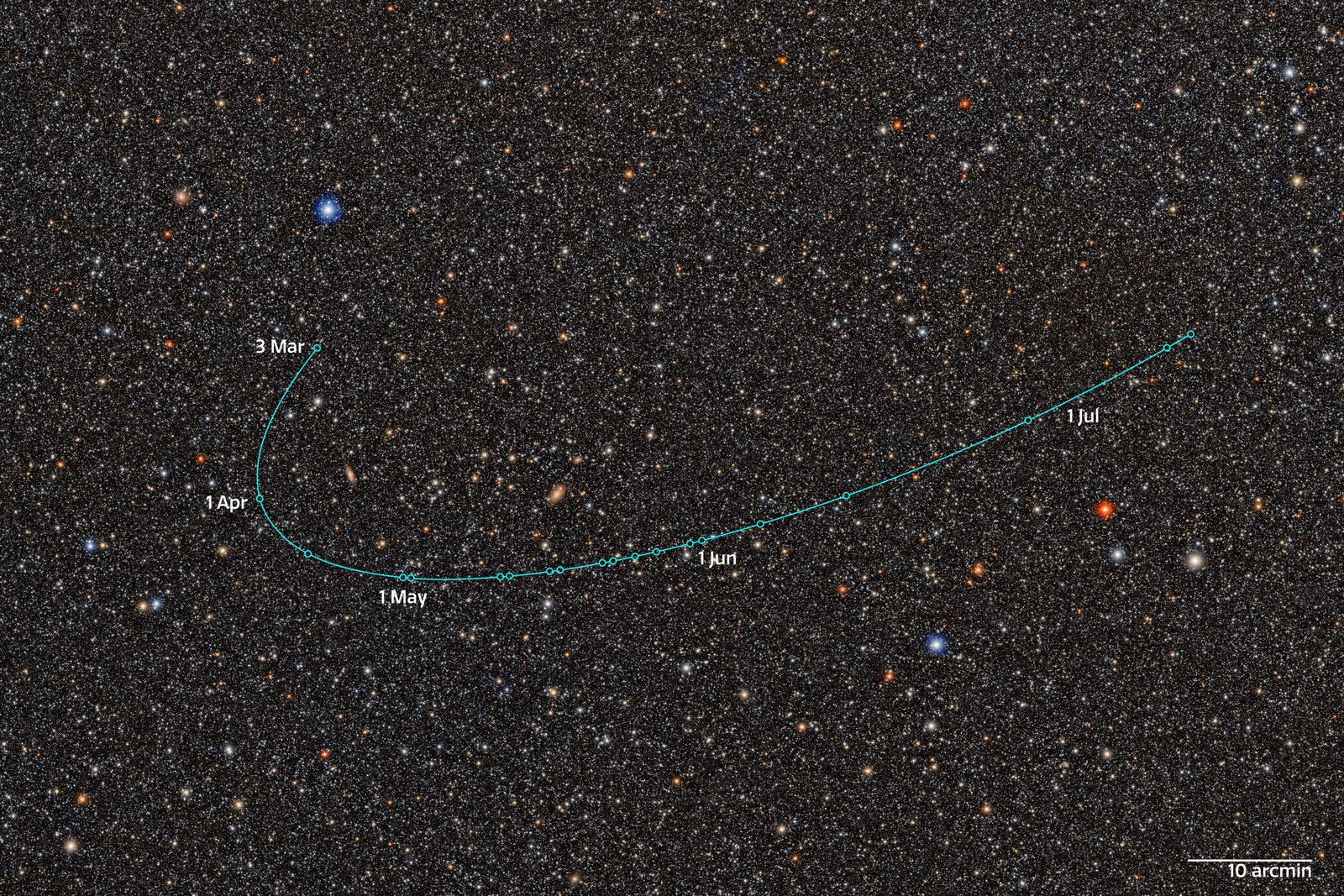
A Possible New Dwarf Planet Just Turned Up Beyond Pluto. Meet 2026 ED138
The Rubin Observatory's first dwarf planet candidate was hiding in front of the Milky Way. Here's what we know about 2026 ED138, and what's still hype.
October 28, 2026 · 3 min read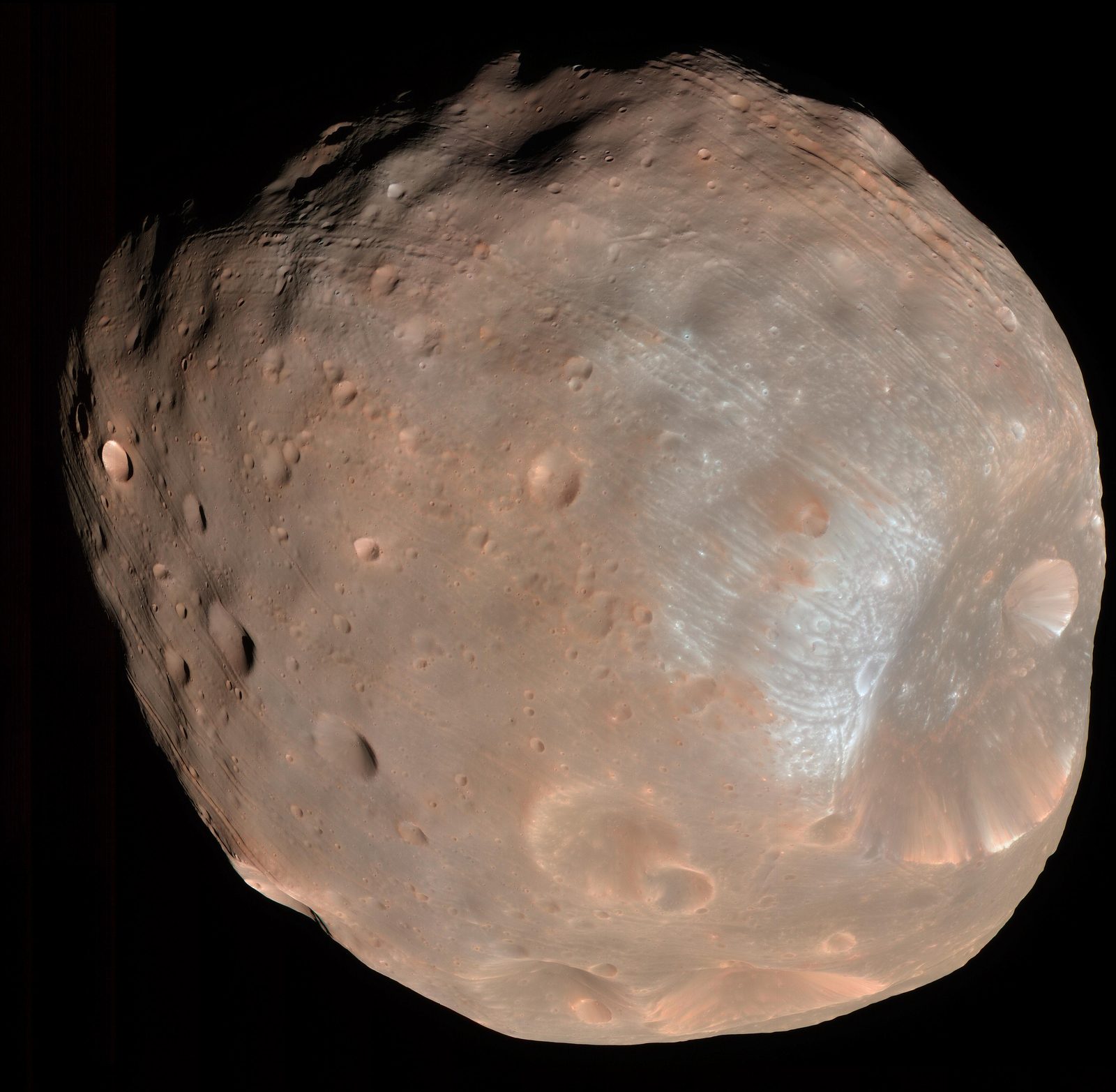
Japan's MMX Launches to Bring Home a Piece of Phobos, Mars's Doomed Moon
JAXA's MMX is headed for Phobos, the Martian moon that's slowly falling. If it works, it'll be the first sample ever returned from the Mars system.
October 28, 2026 · 3 min read