
On November 1, 1977, astronomer Charles Kowal spotted a faint dot that didn't behave like anything on the books. It wasn't an ordinary asteroid, it wasn't quite a comet, and it was hanging out in a part of the solar system where nobody expected to find much of anything: the wide, empty gap between Saturn and Uranus.
That dot was Chiron, and it turned out to be the first member of a whole new family of solar system objects.
What did Charles Kowal find?
Kowal was working at Palomar Observatory in California, combing through photographs of the sky taken on October 18, 1977. On November 1 he noticed a slow-moving object that had shifted position between images. Slow motion across the sky means distance, and this thing was very far away, much farther out than the asteroid belt between Mars and Jupiter.
It got the temporary label 1977 UB, and Kowal nicknamed it "Object Kowal." Once astronomers worked out its path, it was cataloged as minor planet number 2060 and given the name Chiron.
Where is Chiron's orbit?
Chiron's orbit is a stretched-out loop. At its closest it dips just inside the orbit of Saturn, about 8.5 times Earth's distance from the Sun. At its farthest it swings out to about 19 times Earth's distance, almost as far as Uranus. One lap takes about 50 years.
Once astronomers knew where to look, they found Chiron hiding on old photographic plates going all the way back to 1895. Those early sightings let them pin down its orbit very precisely. Its last closest approach to the Sun was in 1996, and the next one comes in 2046.
Why is it named Chiron?
In Greek mythology, Chiron was a centaur, half human and half horse, and the wisest of them all. He was said to have taught heroes like Achilles and Hercules. The name fit an object that seemed to be half one thing and half another, and it set a tradition: similar objects found later between the giant planets are named after centaurs too. That's why the whole group is now called the centaurs.
Is Chiron an asteroid or a comet?
Both, officially. In 1988 Chiron suddenly got brighter, and in 1989 astronomers Karen Meech and Michael Belton saw a fuzzy cloud of gas and dust around it, called a coma. That's classic comet behavior. So Chiron now carries two names: minor planet (2060) Chiron and comet 95P/Chiron.
That was a big surprise. Comets usually only wake up when they get close to the Sun and their ice starts turning to gas. Chiron was doing it while sitting out near Saturn, where sunlight is about 100 times weaker than here.
Does Chiron have rings?
It looks that way, which still sounds a little wild for something only a couple hundred kilometers across. When Chiron passes in front of a distant star, astronomers watch how the starlight blinks. Those "occultation" measurements from the 1990s, 2011 and later showed dips that point to rings of material around it. Newer observations from 2018 and 2022 suggest the ring system is changing, possibly with a new ring forming.
More recently, the James Webb Space Telescope looked at Chiron in infrared light and found a mix of frozen ices on its surface and gases in its coma, including methane. So this little world is still active and still evolving.
Can you see Chiron?
Not with your eyes or binoculars, sorry. Chiron is far too small and far too distant. Seeing it takes a sizable telescope and a camera taking long exposures, and even then it's just a faint point of light slowly creeping past the background stars.
Why this matters
Chiron cracked open a new category. Today astronomers know of many centaurs, and they think these objects drift inward from the Kuiper Belt, the icy zone past Neptune. Some of them eventually get nudged closer to the Sun and become the comets we see in our skies. That makes centaurs a kind of halfway house between the frozen outer solar system and the inner one we live in.
It's also a nice reminder that big discoveries don't always come with a bang. Sometimes it's one person, a stack of photos, and a dot that moved a little too slowly. Nearly 50 years later, that dot has turned out to have a coma, possible rings and a story that's still being written.
Sources
Enjoyed this? Ancient Skies is free and made by one space fan. Buy me a coffee ☕
Keep reading
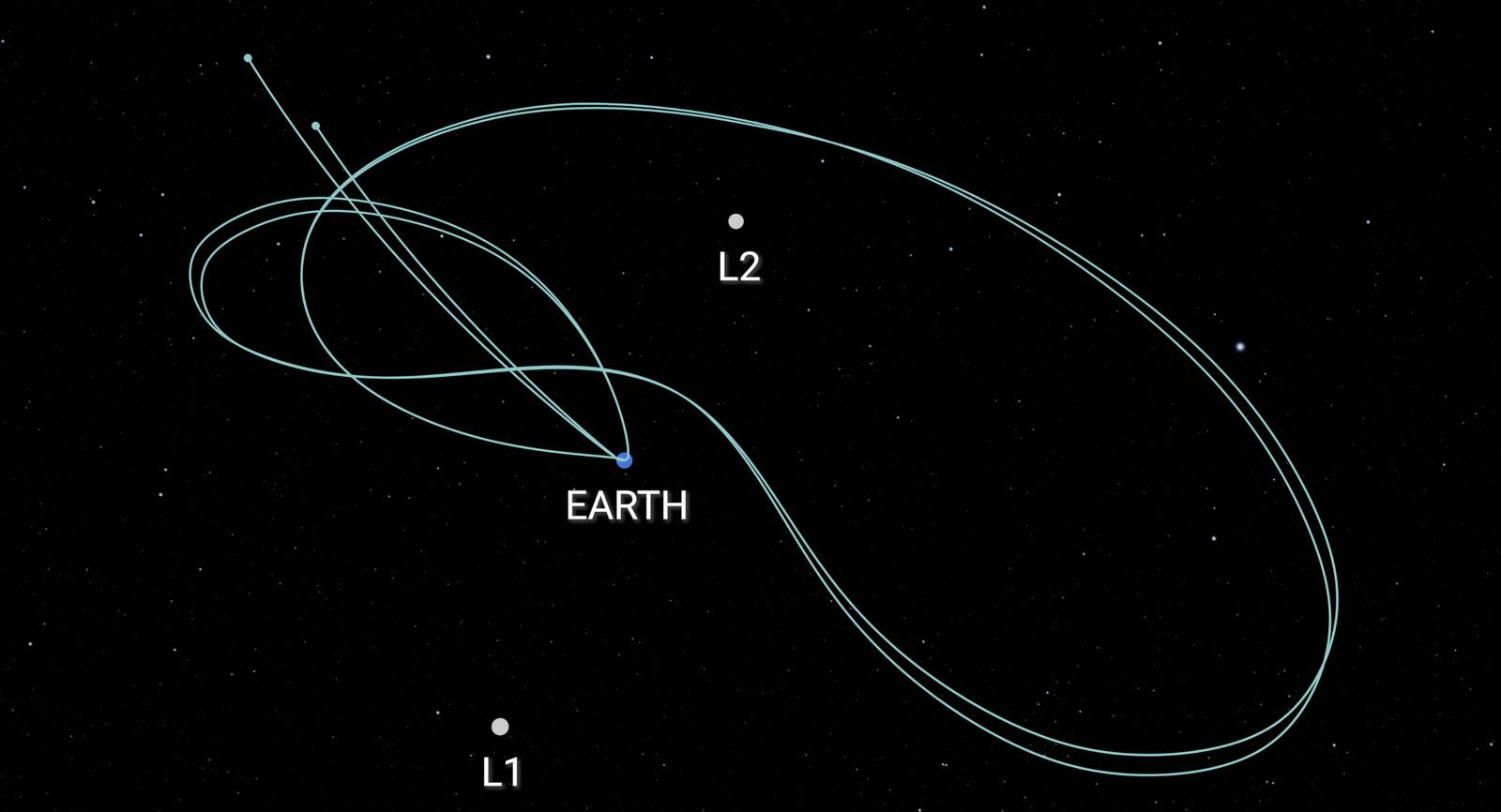
Why NASA's ESCAPADE Mars Twins Are Swinging Back Past Earth This Week
NASA's twin ESCAPADE probes return to Earth Nov. 7 and 9 for a slingshot engine burn that sends them to Mars. Here's how it works and how to spot them.
November 3, 2026 · 5 min read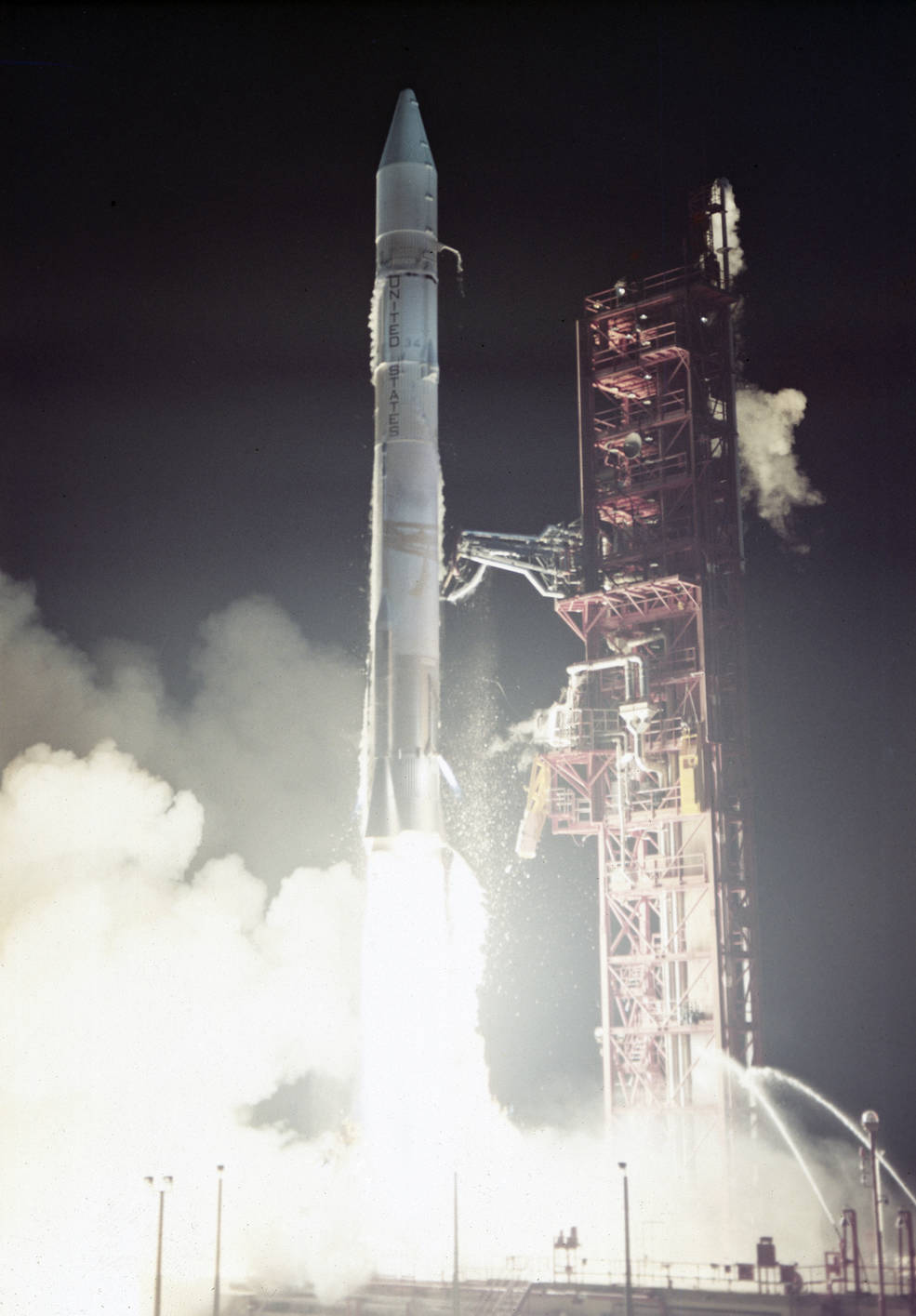
Today in Space History, Nov. 3: Mariner 10 Heads for Mercury by Way of a Venus Slingshot
On Nov. 3, 1973, NASA launched Mariner 10, the first probe to visit Mercury and the first to use one planet's gravity to reach another.
November 3, 2026 · 3 min read